EN
EN


Indoor Gas Room Heater Wholesale Guide for Importers and Distributors
Indoor gas room heaters sit in a useful position in the heating market: no flue, no installation crew, no electricity supply. A unit arrives in a carton, rolls out on its casters, connects to a cylinder, and heats the room it is placed in. That combination keeps the category selling in markets where electric heating is expensive, where power supply is unreliable, and where buyers want heat in one room rather than a whole building.
For importers and distributors, the difficulty is not demand — it is selecting the right mix. An indoor heater range has to cover different room sizes, different combustion technologies and different national gas regulations, and each of those choices changes what you can legally sell and what your after-sales burden looks like.
This guide covers how to match indoor gas room heater models to living rooms, bedrooms and offices, how infrared and blue flame units differ commercially, and which compliance details decide whether a container clears the market.
Why Indoor Gas Room Heaters Keep Selling
Three structural features keep this category moving, and none of them depends on a trend.
No installation and no electricity
A heater that needs no flue, no fixed gas line and no power outlet can be sold to renters, to households in markets where installation costs are high, and to anyone who needs heat in a room the central system does not reach. Nothing about that changes with the economy. If installation labour gets more expensive, demand for portable units tends to rise.
It keeps working when the grid does not
Power-free operation is the least discussed and most durable selling point of an LPG room heater. In markets with unstable supply, rolling blackouts or heavy seasonal grid strain, a unit that runs from a cylinder simply keeps heating. Buyers in those markets tend to reorder instead of buying once.
Running cost works in your favour
In many markets gas remains cheaper per unit of delivered heat than resistive electric heating. That is a merchandising argument your retail customers can repeat on the shop floor, and it holds as long as LPG supply and pricing are stable in the destination market.
Matching the Model to the Room
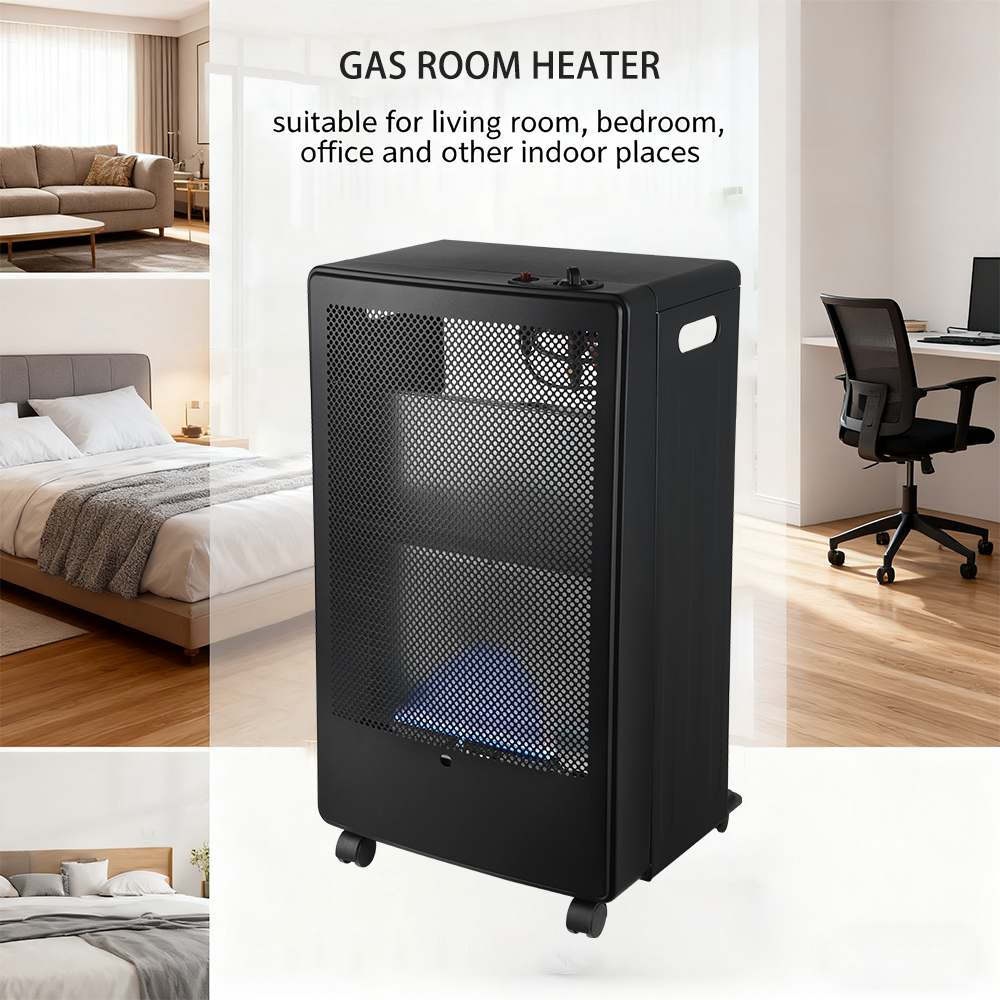
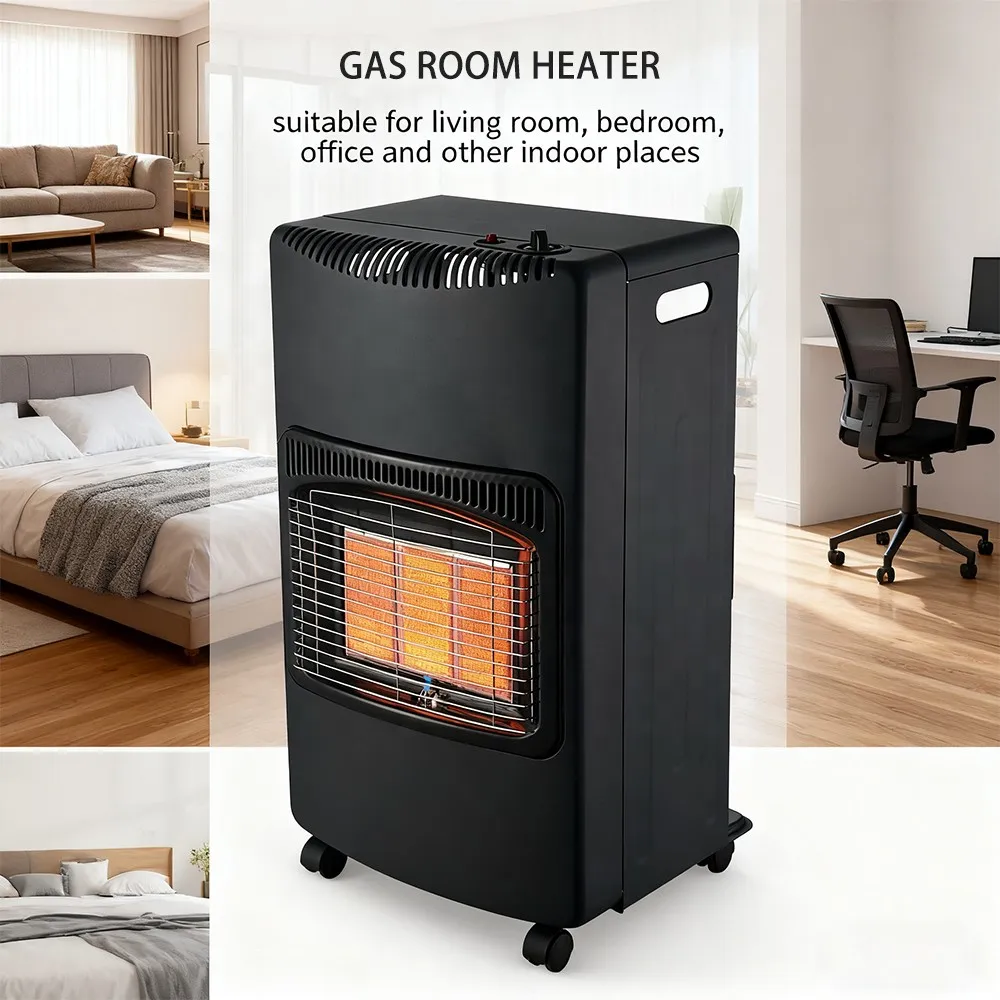
Living room, bedroom, office — the three rooms in the photograph on this page ask for three different specifications. Buyers who ignore the difference usually meet it again as returns and service tickets.
Living rooms: the top of the range
Living rooms are typically the largest and most occupied space in a home, and they set the upper end of your range. This is where buyers should specify the highest practical heat output, multi-panel radiant burners where infrared technology is used, and a broad heat spread rather than a narrow beam aimed at one seat. The body has to look acceptable in a furnished room as well as perform, and a wider base or casters matter more here than anywhere else in the range, because a living room unit gets moved between rooms.
Bedrooms: safety first, output second
Bedroom demand is driven by safety and quiet operation rather than maximum output. The specification that matters most is the oxygen depletion sensor (ODS), which shuts the burner down when room oxygen falls — the first question regulated-market buyers ask. Flame-failure protection, a stable base and a simple rotary control count for more than panel count. Any literature you publish for this segment should state plainly that the unit is designed for ventilated rooms and must not be used in a sealed or unventilated bedroom; distributors who skip that warning inherit the complaints that follow.
Offices and small commercial rooms: sustained rather than instant heat
Offices and workspaces usually need warmth through a working day rather than in short bursts, which changes both the model choice and the fuel decision. Where natural gas is already piped into the building, an NG configuration removes cylinder handling; where it is not, LPG models keep the sale possible. Buyers in this segment tend to ask for a lower profile, steadier output and documentation that satisfies a commercial site rather than a private household.
Infrared or Blue Flame: Choosing the Combustion Technology
Most indoor ranges are built around one of two combustion technologies, and the choice is commercial as much as technical.
Infrared (radiant) units
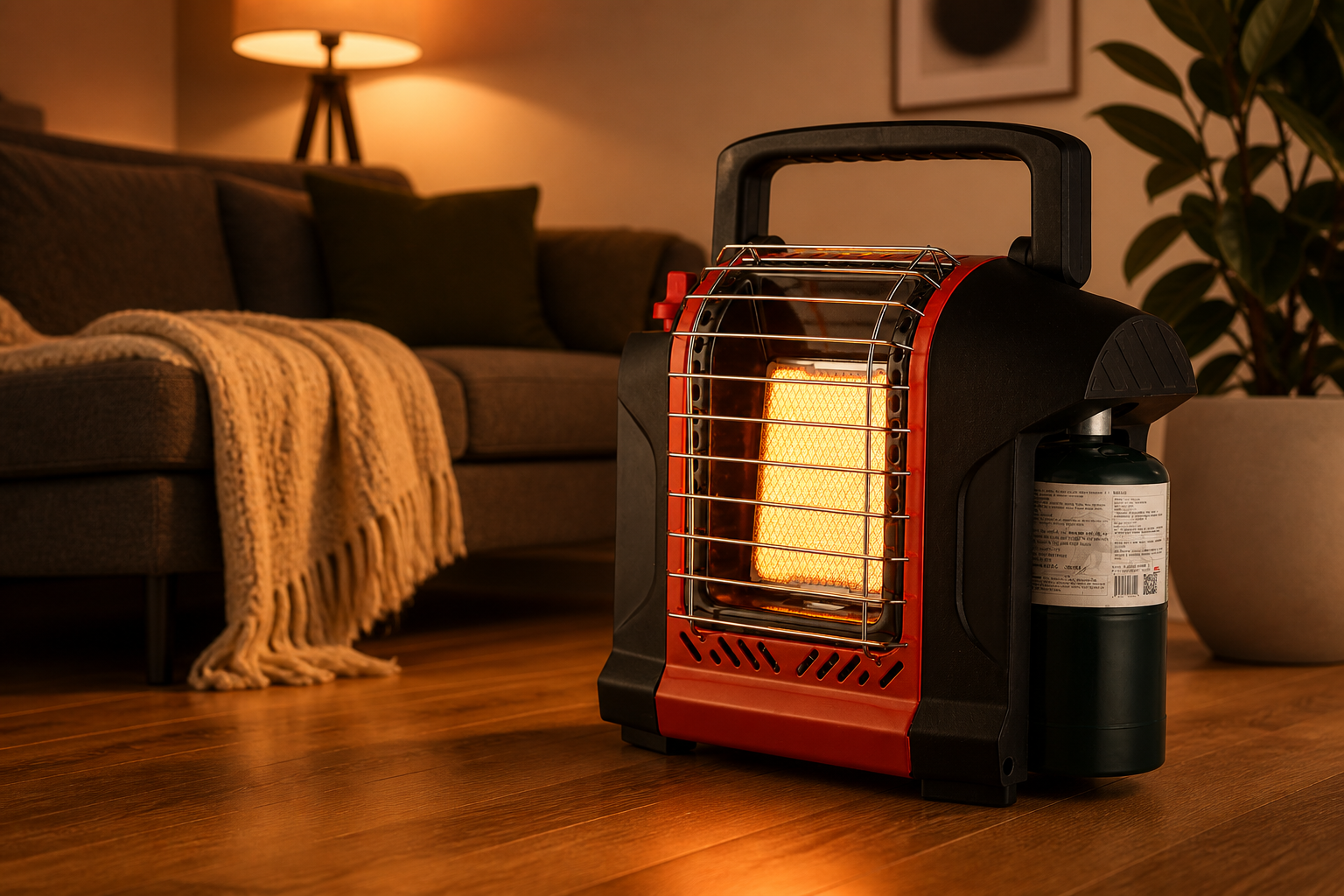
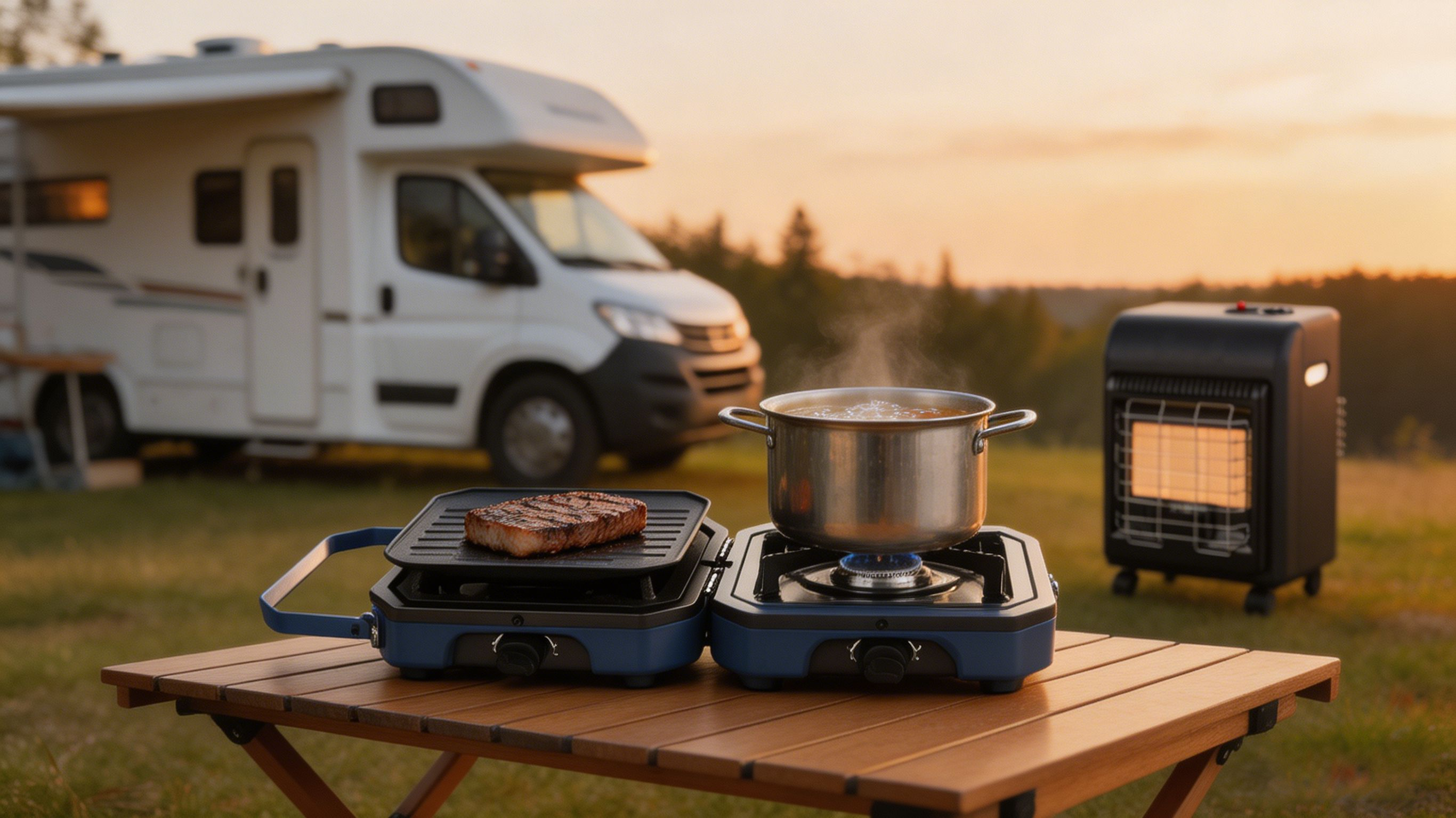
Ceramic or metal radiant plates heat people and objects directly instead of warming the air first. The commercial advantages show up immediately: heat is felt within seconds, the unit stays effective in open rooms and in spaces with air movement, and it suits premises where doors or draughts keep air temperature low. This is also the technology that fits workshop, garage and RV applications, where fast directional heat is an easier proposition than steady ambient temperature. Our portable infrared gas heater is built around that use.
Blue flame units
Blue flame combustion heats air, which the room then circulates, producing steadier and more evenly distributed warmth. Blue flame models are the natural fit for households heating a living room or an office over several hours, and they pair naturally with an ODS safety device for indoor operation. Combustion quality matters commercially too: a clean blue flame produces less soot and odour, which affects both after-sales complaints and how the product is reviewed in your market. Blue flame is not a standard feature across every indoor model: in our own range it is offered on the H002L and H003L. Confirm the combustion type for the specific model you are ordering rather than inferring it from a product photograph.
For buyers who need one SKU to serve several use cases, a dual-purpose unit that switches between radiant and convection output — such as our indoor-outdoor gas stove heater — widens the addressable market without adding a second model to the range.
Specify the gas configuration before you commit
Neither technology is market-neutral. Cylinder connections, supply pressures and injector sizes differ by country, and a unit that performs correctly on one country's LPG can be inefficient or unsafe on another's. Put gas type, supply pressure and connector standard on the purchase order, and confirm that the regulator and hose you ship match the destination market. That single line on the PO prevents the most common first-order failure.
Safety and Compliance Decide Whether the Container Clears the Market
Compliance in this category is model-specific rather than brand-specific, and it is the part of sourcing that most often delays a first order.
- Oxygen depletion sensor (ODS). Expected or required for indoor use in many regulated markets. It shuts the burner off when room oxygen falls, and it is the safety feature buyers ask about first. Confirm the ODS configuration on the indoor mobile gas room heater and on any other model you are ordering — it is the feature that decides whether the unit can be sold for indoor use in your market.
- Flame failure protection. Cuts the gas supply if the flame goes out — the standard second layer of safety on a gas appliance.
- Third-party certification. The Luoqi range carries CE certification and UKCA for the UK market. Certificates are issued per model, so always request the certificate that names the exact model number you are importing rather than a general supplier document.
- Documentation per market. Instruction booklets, warning labels and gas pressure settings must match the destination market. If you supply regulated retail chains, treat translated documentation as part of the product rather than an afterthought.
- Test records. Gas-tightness and functional testing records taken before packing are the evidence a third-party inspector will ask for, and the fastest way to answer technical questions from your own customers.
Planning Your Range and Your First Container
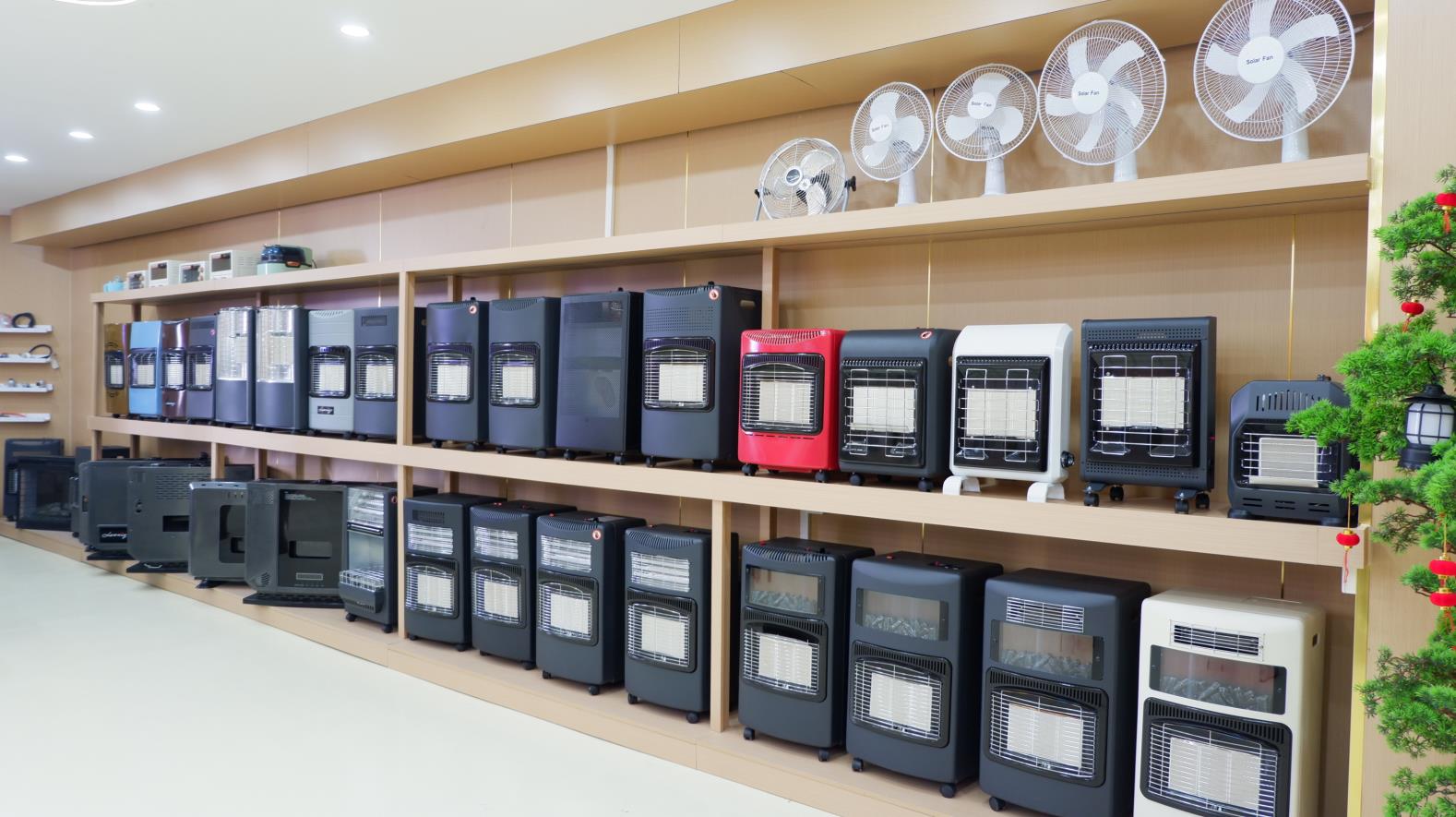
An indoor heater range usually starts with two or three models — one for large rooms, one for bedrooms, and one dual-purpose or indoor-outdoor unit — and grows once your own customers report which configurations move.
- Model mix before volume. A range that covers three rooms sells faster than three versions of the same heater competing for the same shelf space.
- Mixed-SKU containers. Most first orders combine several models. Confirm with your supplier how many SKUs will load into one container before you publish a range to your customers.
- Spare parts on the first shipment. Regulators, hoses, thermocouples, ODS assemblies and control knobs generate most service requests. Ordering them with the first container is cheaper than air-freighting them later.
- Packaging and manuals for the destination. Retail-ready cartons, printed manuals in the correct language and cartons strong enough for long-haul stacking protect the margin you planned for.
- Seasonal timing. Indoor heating demand builds ahead of winter, and production capacity is shared across the whole gas heating season. Place firm orders early rather than assuming capacity stays open.
- Branding. Panel colour, logo, packaging and instruction sets can be adapted to your market — useful when you sell under your own label and need the product to look local rather than imported.
Professional Tips for B2B Buyers
- Ask for the certificate that names your model number. A general CE or UKCA document does not automatically cover every model in a factory's catalogue.
- Put the gas specification in writing. Type, pressure, injector and connector standard belong on the purchase order, not in an email thread.
- Order spares with the first container. Service parts are the difference between a stocked product and a stranded one.
- Test one unit before container volume. Check ignition, flame stability, odour and the control layout against your market's expectations.
- Match the model to the room you are selling into. A bedroom unit and a living room unit are not interchangeable, and an ODS is not optional in most regulated markets.
- Confirm capacity before the season, not during it. Heating production fills in the months before winter.
FAQ
Q1: What is the difference between an infrared and a blue flame indoor gas heater?
Infrared units heat people and objects directly with radiant energy, so warmth is felt within seconds. Blue flame units heat the air, which the room then circulates, producing steadier ambient warmth. Infrared suits open, draughty or intermittently used spaces; blue flame suits rooms heated over several hours. Blue flame is not standard across every indoor model — in our own range it is offered on the H002L and H003L — so confirm the combustion type for the model you are ordering before you publish specifications to your own customers.
Q2: Do indoor gas room heaters need electricity?
No. They run from an LPG cylinder and require no power outlet, which is one reason demand holds up in markets with unreliable electricity supply.
Q3: What is an ODS, and do I need it for my market?
The oxygen depletion sensor shuts the burner down when room oxygen falls below a safe level. It is expected or required for indoor use in many regulated markets. Tell us the destination market and we will confirm the configuration that applies.
Q4: Can a gas room heater be used in a bedroom?
Only in a ventilated room and only in line with the instruction booklet. Gas combustion consumes oxygen and releases moisture, so a sealed or unventilated bedroom is not a valid application for any indoor gas heater.
Q5: Can we order these heaters under our own brand?
Yes. OEM and private-label programs cover branding, panel colour, packaging and instruction sets, with MOQs set for first orders.
Q6: Which certifications do you hold?
Our range carries CE certification and UKCA for the UK market. Certification is also arranged according to destination-market requirements — tell us where the container is going and we will confirm the applicable documents.
Q7: Can we mix indoor heaters with other gas products in one container?
Yes. Mixed containers can be arranged so you can build a complete range instead of committing to a single model.
Q8: Do you supply spare parts, regulators and hoses?
Yes. Regulators, hoses, thermocouples, ODS assemblies and control parts are available as service items alongside the units.
Q9: What are your MOQs and lead times?
Both depend on model, configuration and volume. Send us your target market and specification and our sales team will confirm the schedule for your order.
Conclusion
Indoor gas room heaters are a category where the specification decision is made once and then repeated for years. Choose the models that match the rooms your customers actually heat, confirm the gas configuration and the safety devices for each market, and build the first container around a mix you can sell rather than one unit you have to push.
Zhongshan Luoqi Appliance manufactures indoor gas room heaters, gas water heaters, gas stoves and BBQ grills from our factory in Dongfeng Town, Zhongshan, Guangdong, with OEM and ODM programs, spare parts support and factory-direct volume pricing. Request specifications, certification documents and volume pricing for indoor gas room heaters — or send us your target markets and room mix — through our inquiry form.
Related reading: Gas vs Electric Room Heaters Comparison, Misconceptions About Using Gas Room Heaters, How to Choose a Gas Room Heater Manufacturer