EN


LQ-KB1 Compact Infrared Gas Heater: Specifications, Container Maths and the E-Commerce Case
A gas heater sold through e-commerce is a different product from the same heater sold through a hardware distributor. The box has to survive a parcel network. The carton dimensions decide the fee before the product decides the price. And the paperwork has to be in place before the listing goes live, not after the first complaint.
The LQ-KB1 is the compact end of our infrared range, and it is the model we build for that channel. Three ceramic plates, three power settings from 1.5 kW to 4.2 kW, a 5 kg cylinder bay, and a complete packed weight of 7.2 kg.
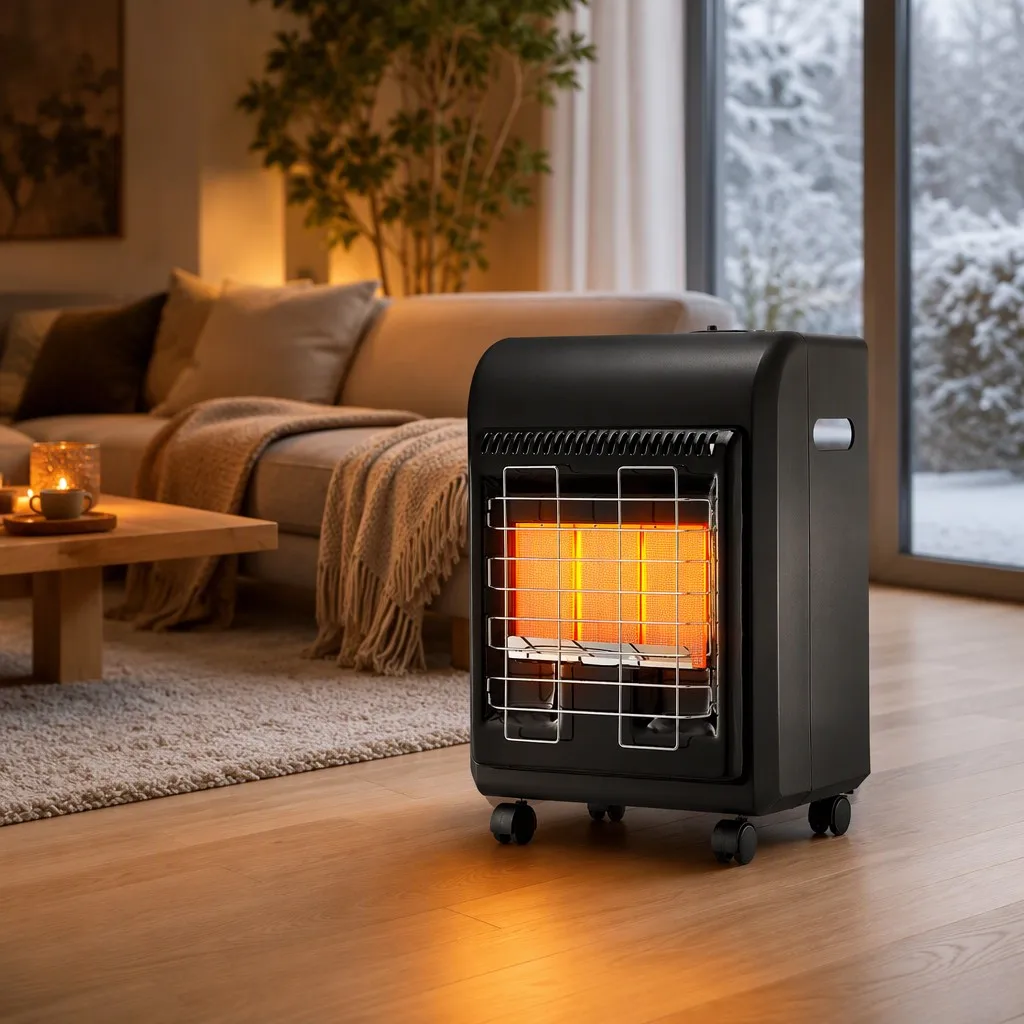
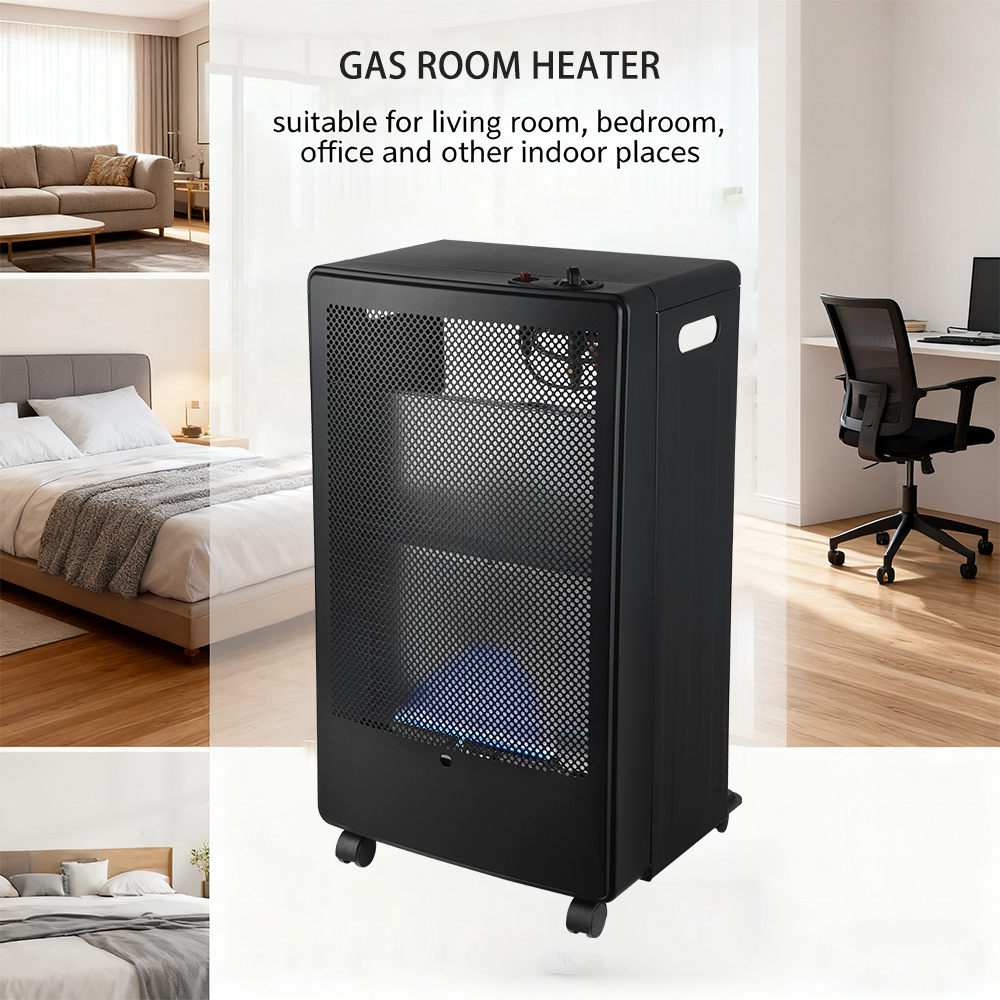
The LQ-KB1: a 6.2 kg infrared cabinet on castors, sized to move from room to room
The Specifications, Read as a Buyer
The sheet is short, so it is worth reading every line properly.
- Piezo-electric ignition. Push-button spark, no battery and no mains supply. The unit runs entirely from the cylinder.
- Infrared heating, three ceramic plates, three power settings, 1.5 kW to 4.2 kW. Radiant heat aimed forward rather than warm air circulated around the room, which is why it is felt within a minute of lighting.
- Flame-failure protection. A thermocouple valve closes the gas path if the flame goes out.
- Anti-tilt device and ODS. One cuts the unit if it is knocked out of position, the other if the oxygen level in the room falls.
- Space for a gas cylinder up to 5 kg. The cylinder sits in the rear compartment, so the unit is self-contained and needs no external bottle beside it.
- Castors, 300 × 280 × 560 mm, 6.2 kg net, 7.2 kg gross.
Two of those lines matter far more than the others for this channel: the 5 kg cylinder and the 6.2 kg net weight. They are what make the unit a consumer product rather than a project appliance.
The Size Is the Product
Our larger infrared cabinets carry a 15 kg cylinder and stand roughly twice the footprint. The KB1 was drawn around a 5 kg bottle instead, and that single decision cascades through the whole commercial case.
A 5 kg cylinder is the size a household can carry up a stairwell and swap without help. It is also the size stocked by petrol stations, hardware chains and campsites across Europe, which solves the replacement-fuel question that kills a gas appliance listing in a market where the buyer cannot find the bottle. And because the cabinet only has to enclose 5 kg of gas, the whole unit lands at 6.2 kg — light enough for one person to carry by the side handle, and light enough that a return parcel is a cost you can absorb rather than a write-off.
The dimensions follow: 300 mm wide, 280 mm deep, 560 mm high. That is small enough to stand between a sofa and a wall, and it is why the unit photographs well in a normal apartment rather than needing a showroom.
The Container Maths
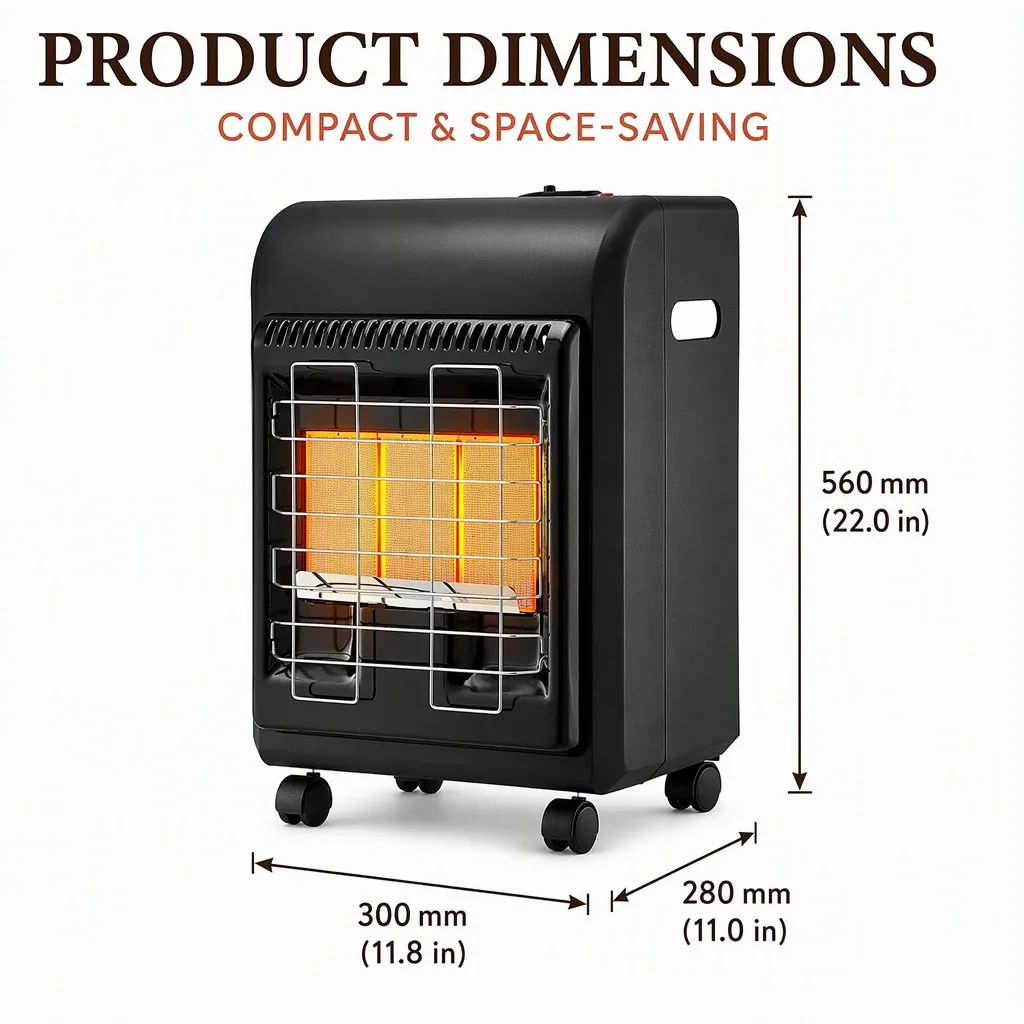
560 mm high, 300 mm wide, 280 mm deep — the footprint that makes the unit portable
The packing carton is 420 × 330 × 580 mm, which is 0.0804 cubic metres. The product itself occupies 0.047 cubic metres. Multiplied out against the loading figures on the sheet:
- 350 pcs per 20’GP = 28.1 cubic metres
- 890 pcs per 40’HQ = 71.5 cubic metres
Those two figures are consistent with each other — the 40-foot number is about 2.5 times the 20-foot number, which mirrors the capacity ratio between the two boxes. And 890 cartons at 7.2 kg gross is 6.4 tonnes, a small fraction of what a 40-foot container will carry. So this product is volume-bound, not weight-bound: the load is limited by cubic space, and every cubic centimetre you take out of the carton goes straight to your freight cost per unit.
Which brings up the one number worth arguing with the factory about. The carton is 1.71 times the volume of the product — about 41% of the box is air, cushioning and clearance. Compare that with a well-optimised cabinet carton at around 30%, and you can see there is room. Ask what happens to the loading figure if the carton is tightened; on a volume-bound product that is a freight conversation, not a packaging detail.
The E-Commerce Maths Nobody Runs
Air freight does not work on this carton
On the common 1:6,000 volumetric convention, a 42 × 33 × 58 cm carton bills at about 13.4 kg against an actual gross weight of 7.2 kg. Almost double. That single calculation decides the logistics model: this is not an air-freight product. It moves by sea to a destination warehouse and then by ground carrier to the customer.
Dimensional weight follows you into the last mile
The same 0.0804 cubic metres that governs the container also governs the parcel fee and the marketplace storage fee. A seller who optimises the carton by 10% takes 10% off three separate line items at once. This is why we would rather discuss the box than the price.
Returns are survivable
At 6.2 kg net, a returned unit is a parcel, not a pallet. That sounds trivial until you price a returns allowance into a gas appliance listing — on a 15 kg cabinet the return is often uneconomic, and the seller absorbs it as a write-off. On the KB1 the arithmetic still works.
Documentation before decoration
The specification sheet carries no certification mark. For an unvented gas appliance sold into North America or Europe, that is the first thing to close, not the last. Get the listing certificate and the standards it is listed to, in the seller’s name where the marketplace requires it, before you photograph the product, let alone list it.
Three Safety Devices, and What They Do Not Cover
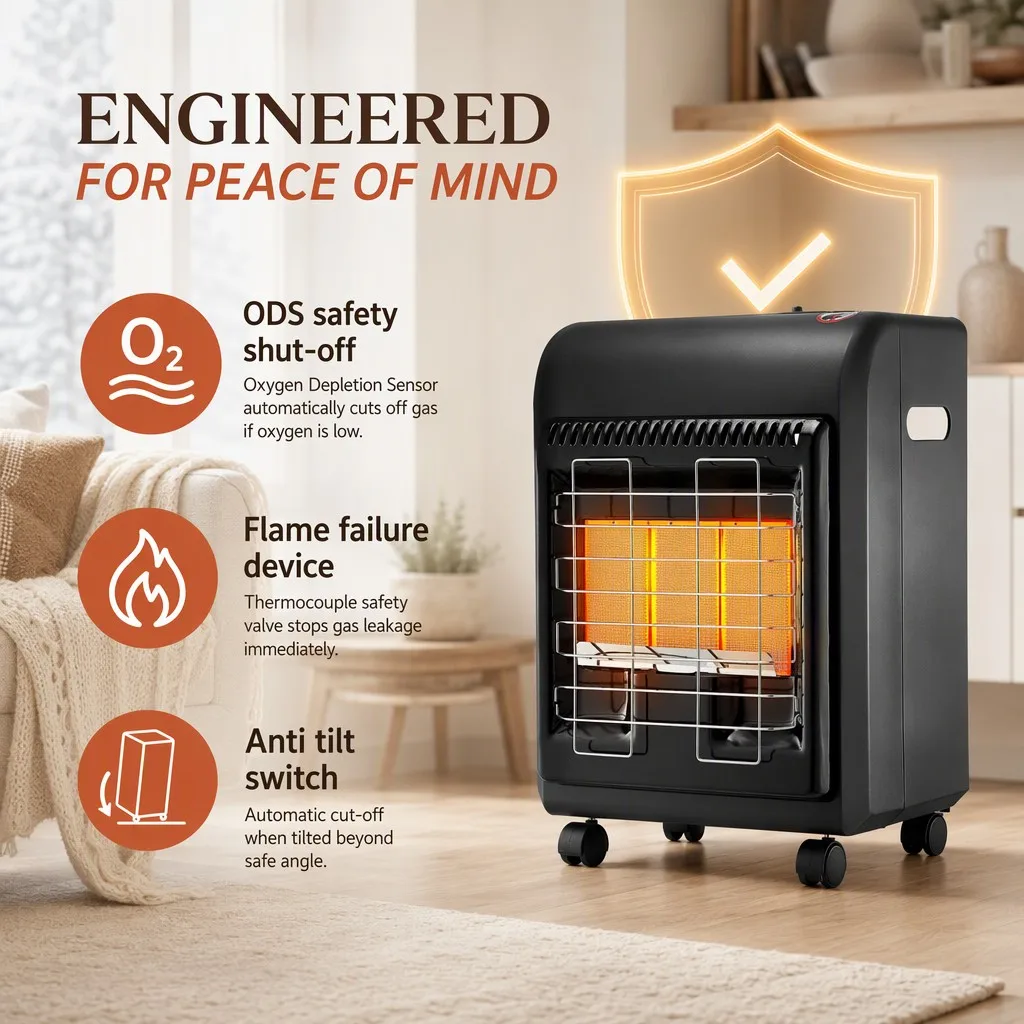
The three safety systems on the KB1: ODS, thermocouple flame-failure protection and the anti-tilt switch
- ODS — oxygen depletion sensor. Shuts the gas off when the oxygen level in the room falls. This is the device that makes an unvented appliance defensible indoors, and it is the one to explain in the listing copy.
- Flame-failure device. A thermocouple holds the gas valve open only while it senses a flame; if the flame goes out, the valve closes and the gas stops.
- Anti-tilt switch. Cuts the unit if it is tipped beyond a safe angle. On a castored cabinet that gets wheeled between rooms, this is the device that earns its place.
None of the three replaces ventilation. An unvented gas heater consumes oxygen and needs air; ODS is the backstop for the day the room runs short, not permission to run the unit in a sealed room. Every manual you print should say that in plain language, in the language of the market.
The cylinder is the other safety subject. A 5 kg bottle is light enough to be handled casually, which is exactly the risk: change it cold, never beside a flame, and check the connection with soap solution rather than a lighter. Put that in the manual and on the carton.
Two Markets, Two Different Conversations
North America
An unvented gas appliance is sold on the strength of a listing from a recognised testing body. Before the listing goes up, get the certificate and the standard it is listed to, and confirm who holds it — the marketplace will ask the seller of record for that documentation, not the factory. Unvented appliance rules also vary between states and provinces, so check the destination before you stock deep.
Europe
The route is a declaration of conformity against the applicable standards, with the technical file behind it. The commercial question is different from North America and more practical: fuel. A 5 kg cylinder is widely available across Europe, but the regulator and connection a customer already owns will vary by country, so confirm what the unit ships with and what the market expects.
What is common to both
Manual language, carton markings, and the fact that a gas appliance listing is judged on documentation before it is judged on photographs. Sellers who treat the certificate as a formality are the ones who lose a listing mid-season.
What to Confirm Before You Order
- Certification and the standard it is listed to — in the name your marketplace requires.
- The middle power setting. The sheet gives the range and the number of settings; ask for the exact intermediate value so the listing copy is accurate.
- Cylinder connection and regulator for the destination market.
- Carton optimisation — what the loading figure becomes with a tighter box.
- Manual and carton language per market.
- Spares: thermocouple, ODS probe, ceramic plates, control knob, castors.
Professional Tips for E-Commerce Buyers
- Price the carton before you price the product. On a volume-bound unit, the box is the margin.
- Never quote air freight on this carton. At a 13.4 kg volumetric billing against 7.2 kg actual, the number will not work.
- Buy the certificate before the photography. A listing without documentation is a listing with a removal date on it.
- Stock the thermocouple and the ODS probe in the destination warehouse. They are the two parts that generate a support ticket.
- Put the 5 kg cylinder story in the listing. Ease of refuelling is why this unit sells to a consumer rather than to a project.
- Sell the infrared character honestly: it heats what it faces, quickly. Do not promise whole-house warmth from a 4.2 kW cabinet.
- Keep one carton intact as the returns template. A return that arrives in the original box is a resale; one that does not is a loss.
FAQ
What is the LQ-KB1?
A compact infrared gas room heater with three ceramic plates, three power settings and a rear compartment for a gas cylinder up to 5 kg. It runs on piezo ignition with no mains connection and moves on castors.
How much heat does it produce?
Three settings spanning 1.5 kW to 4.2 kW. Ask us for the exact intermediate setting if you need it for listing copy — the sheet gives the range and the number of settings, not the middle value.
Does it need electricity?
No. Ignition is piezo-electric, so the unit runs entirely from the cylinder with no power cord.
What size gas cylinder does it take?
Up to 5 kg, carried in the rear compartment so the cylinder travels with the heater rather than standing beside it.
What are the dimensions and weight?
300 × 280 × 560 mm, 6.2 kg net and 7.2 kg gross. The packed carton is 420 × 330 × 580 mm.
How many fit in a container?
The loading figures are 350 pcs per 20’GP and 890 pcs per 40’HQ. At 0.0804 cubic metres per carton that is 28.1 and 71.5 cubic metres respectively — the product is volume-bound, not weight-bound, since 890 cartons weigh about 6.4 tonnes in total.
What safety devices are fitted?
An oxygen depletion sensor, a thermocouple flame-failure device and an anti-tilt switch. The first two are combustion safety devices; the anti-tilt switch protects against the unit being knocked over. None of them replaces ventilation.
Can we have it under our own brand?
Yes. Carton artwork, manual language and market-specific documentation are all open to specification. Bring the destination market, the volume and the channel you intend to sell through.
Next Step
The LQ-KB1 is the model in our gas room heater range built specifically for e-commerce: small enough for a parcel network, light enough for a returns allowance, and specified around the cylinder size a household can actually replace. If you sell into the United States, the United Kingdom or continental Europe, send us the destination market, the channel and your annual volume, and we will come back with the certification route, the carton options and a quotation.
If you are still deciding between an infrared panel and a blue flame burner, our guide to infrared versus blue flame sets out where each one wins.