EN



Gas Heater Demand Trends: A 2027 Sourcing Map for Importers and Distributors
There is no such thing as "the gas heater market". There are at least five separate businesses that happen to share a fuel: a portable radiant heater sold to a household in a cold snap, a fixed convector sold into an apartment refurbishment, a flame patio heater rented out by an events company, an outdoor kitchen specified by a landscaping contractor, and a camping appliance sold on a marketplace in August.
They move for different reasons, on different calendars, and through different channels. A distributor who plans all five as one demand curve will hold the wrong stock in the wrong month — which is the most common and most expensive mistake in this category.
Why This Article Contains No Dollar Forecast
A search for "gas heater market size" returns a wall of numbers that do not agree with each other, most of them generated by analysts who have never seen a container loading plan, and all of them behind a paywall you cannot audit. Quoting one of them would make this page look authoritative and make it less useful.
What follows instead is built from two things you can check: the structural conditions that drive demand in each market, and the arithmetic of our own product range. Where a table is a structural assessment rather than a statistical series, it says so. Where a number comes from a calculation, the calculation is shown.
Table 1 — Where the Demand Actually Sits
Six conditions determine whether a market can absorb gas heating at all: a cold window long enough to justify the purchase, a fuel that is piped or bottled and available locally, housing stock that cannot easily be centrally heated, a retail channel that can carry a bulky appliance, and a compliance route a factory can actually clear.
| Market | Cold window | Dominant heating fuel | Housing pattern | Main channel | Best-fit product |
|---|---|---|---|---|---|
| United Kingdom | Oct–Mar | Mains gas | Old, poorly insulated, gas-connected | DIY and hardware multiples | Warm-air convector, cylinder radiant |
| Germany, Netherlands, Belgium | Oct–Apr | Mains gas, some oil | Apartment-heavy, rented | Equipment retail, e-commerce | Compact infrared, warm-air cabinet |
| France | Nov–Mar | Electric, gas | Mixed; second homes in the south | Hypermarket, bricolage | Patio flame, portable radiant |
| Nordics | Sep–Apr | District heat, electricity | Well insulated, code-driven | Building trade suppliers | Narrow: backup and outdoor only |
| Poland, Czechia, Slovakia | Oct–Apr | Coal transitioning to gas | Detached, self-built | Builders' merchants | Larger output radiant, convector |
| US Northeast | Nov–Mar | Gas, heating oil | Older detached, basements | Big-box, online marketplace | Propane radiant, garage heaters |
| US South | Dec–Feb, short | Electric | New build, large volume | Online marketplace | Small spot heaters, patio |
| Japan, Korea | Nov–Mar | Kerosene, electricity, gas | Small, dense apartments | Appliance chains, e-commerce | Compact, storage-friendly units |
| Gulf states | Dec–Feb, mild | Electric | Villas, hospitality | Project and hospitality supply | Patio flame for terraces |
| Australia, New Zealand | Jun–Aug | Gas, electricity | Detached, outdoor living | Hardware, outdoor living retail | Patio flame, outdoor kitchen |
Table 1 is a structural assessment of market conditions, not a statistical series. Its purpose is to show that the five product families in the intro do not compete in the same place, not to size any market.
Table 2 — Which Product Actually Fits Which Market
Reading across a row tells you whether a product family travels. Reading down a column tells you what a market will buy. The pattern to notice is that the two radiant families are near-universal, while the fixed and outdoor families are concentrated.
| Product family | UK | DE / NL / BE | FR | CEE | US | JP / KR | Gulf | AU / NZ |
|---|---|---|---|---|---|---|---|---|
| Portable blue flame (cylinder) | ● | ○ | ○ | ● | ○ | — | — | ○ |
| Portable infrared (ceramic) | ● | ● | ● | ● | ● | ○ | — | ○ |
| Fixed warm-air convector | ● | ● | ○ | ● | — | ○ | — | — |
| Patio flame (tower / pyramid) | ● | ● | ● | ○ | ○ | — | ● | ● |
| Outdoor kitchen / built-in grill | ○ | ○ | ○ | — | ● | — | ○ | ● |
● primary market ○ secondary or developing — not a realistic fit. Assessment based on fuel availability, housing and channel, not on sales data.
Table 3 — The Order Calendar Matters More Than the Forecast
Every table of demand drivers is worth less than this one, because demand in this category is triggered by weather that nobody can predict, while the order window is fixed by shipping. If you are late, the forecast does not matter: the stock arrives after the cold snap that would have sold it.
| Market | Peak sell-through | Stock must be in market by | Container order by | Second window |
|---|---|---|---|---|
| UK | Oct–Jan | Late September | July | January clearance, then February restock |
| Germany, NL, BE | Oct–Feb | Early October | Late July | November reorder on cold snap |
| France | Nov–Feb | Mid October | August | Patio season runs Apr–Sep |
| Poland, Czechia | Oct–Mar | Mid September | July | Single season, deep first order |
| US (retail) | Oct–Dec | September | June–July | January cold-snap replenishment |
| US (online) | Sep–Jan | Rolling, 60-day cover | Rolling quarterly | Continuous; FBA limits bind first |
| Japan, Korea | Nov–Feb | Early October | August | Single season |
| Gulf | Nov–Feb (hospitality fit-out) | Project-driven | 90 days before handover | Summer outdoor season is the opposite case |
| Australia, NZ | May–Aug | April | January–February | Counter-cyclical to Europe |
The order-by column assumes sea freight plus destination clearance and inland move. Australia is the useful test: it buys the same products as Europe, six months out of phase, which is why a mixed export book smooths a factory's year.
Table 4 — One Product, Five Ways to Get It Wrong
The most expensive trend in this category is not a demand trend. It is a specification mismatch: a container that arrives technically compliant in the factory's market and unusable in the buyer's. These are the dimensions that differ, and where the mistake usually happens.
| Market | Electrical | Gas / cylinder | Certification route | Where buyers get burned |
|---|---|---|---|---|
| UK | 230 V / 50 Hz, UK plug | Mains gas; butane and propane cylinders both in use | UKCA, separate from EU CE | An EU-only declaration; regulator type |
| Germany, NL, BE | 230 V / 50 Hz, Schuko | Mains gas; propane dominant outdoors | CE | Nominal network pressure; German manual |
| France | 230 V / 50 Hz | Butane widely used domestically | CE | Butane vs propane jetting; French manual |
| Nordics | 230 V / 50 Hz | Largely electric and district heat | CE plus national building rules | Stocking gas into an electric market |
| Poland, Czechia, Slovakia | 230 V / 50 Hz | Mains gas expanding; propane in cylinders | CE | Under-specifying output for larger rooms |
| United States | 120 V / 60 Hz | Propane cylinders; natural gas at a different delivery pressure | Listing by a recognised testing body; unvented rules vary by state | Shipping a 230 V / 50 Hz build; no listing file |
| Canada | 120 V / 60 Hz | Propane dominant; provincial variation | Canadian listing, not a US transfer | Assuming a US certificate covers Canada |
| Japan, Korea | 100 V / 50–60 Hz (JP); 220 V / 60 Hz (KR) | LPG dominant for portable heating | National schemes; local language mandatory | Voltage and plug; packaging size for small flats |
| Gulf states | 230 V / 50 Hz, varied plugs | LPG cylinders; project-specified | Project or consultant specification | Coastal corrosion spec ignored |
| Australia, NZ | 230–240 V / 50 Hz, AS/NZS plug | LPG cylinders widely available | Australian certification, separate regime | CE paperwork presented as sufficient |
Confirm nominal gas pressure, regulator type and the exact approval for your destination with the factory before ordering. This table identifies where the differences sit; it is not a substitute for the destination's own requirements.
Table 5 — Drivers, Mechanism, and What to Do About It
This is the part that earns its place in a range plan. A driver only matters if you can name the mechanism by which it reaches your order book, the product it favours, and the window in which you have to act.
| Driver | Mechanism | Product it favours | When to act |
|---|---|---|---|
| Gas cheaper than electricity per kWh of heat | Households switch the appliance, not the boiler | Portable radiant, warm-air convector | Same season; price signals are fast |
| Electrification policy and heat-pump subsidy | Suppresses fixed gas installs, not portable purchases | Portable and outdoor only; avoid fixed indoor | Two to three years out; watch consultations |
| Hospitality reopening terraces year-round | Venues buy by seating zone, replace on breakage | Patio flame, spares and glass | Before the shoulder season, not the peak |
| Smaller apartments and rented housing | No fixed install allowed; storage is the constraint | Compact, foldable, light units | Design-in lead time: one model cycle |
| E-commerce replacing specialist retail | Carton size and weight become the pricing lever | Any unit with a tight carton and a low gross weight | Immediately; it is a packaging decision |
| Tightening certification in destination markets | Unlisted stock becomes unsellable mid-season | None — it removes products rather than favouring them | Before production; certificates are slow |
| Cylinder availability and refill infrastructure | A heater nobody can refuel is returned, not used | Sizes matched to the local bottle, not the biggest | Market entry; check before the first container |
| Outdoor living spend | Moves from a heater to a fitted outdoor kitchen | Built-in modules, outdoor kitchen | 12–18 months; project-led |
What This Means for a 2027 Range Plan
Three conclusions follow from the tables above, and they are uncomfortable for anyone who plans a range by adding SKUs year on year.
First, the portable radiant families are the only near-universal products in the range. If you sell into more than one region, they are what funds everything else. The mistake is to treat them as the low-margin entry product and push the fixed convector as the growth story. The convector is the growth story in markets that already have piped gas and a renovation cycle; in markets that do not, it is dead stock.
Second, the calendar is more reliable than the forecast. Nobody can tell you whether January will be cold. Everybody can tell you that a container ordered in January arrives after the season. Plan the range around the order calendar in Table 3, and treat weather as upside rather than as a plan.
Third, the outdoor families are where the margin is, and where the service burden is. Patio flame and outdoor kitchens carry a higher average selling price and a much higher after-sales load — glass, burners, regulators. A range plan that includes them without a spares plan converts margin into complaints within two seasons.
Professional Tips for Buyers
- Plan by channel, not by country. The same market buys a different product online than through a builders' merchant.
- Put the order calendar in front of your finance team before the range plan. The cash timing, not the demand, is what kills distributors.
- Treat carton and gross weight as a specification on every SKU. On a volume-bound product they decide the landed cost more than the ex-works price does.
- Never carry a fixed-install product into a market whose gas pressure you have not confirmed in writing.
- For outdoor ranges, order glass and ignition with the first container. They are the parts that take a unit out of service.
- Keep one counter-cyclical market in the book if you can. Southern-hemisphere demand smooths the factory year and improves your position on price.
- Re-read the certification position every season. It is the one input in this category that can turn sellable stock into scrap between order and arrival.
FAQ
Is global demand for gas heaters growing?
It depends which family you mean, and that is the honest answer. Portable radiant demand moves with fuel prices and cold snaps and is broadly stable to modestly growing; fixed indoor gas heating faces a structural headwind from electrification policy in parts of Europe; outdoor and patio heating has grown for a decade on hospitality and outdoor-living spend. Averaging these into one growth rate produces a number that is true of nothing.
Which market should a new exporter target first?
One where the fuel is already in place, the certification route is clear to you, and the channel can carry the carton. For most factories that means the UK or a western European market for portable heating, and the Gulf or Australia for outdoor heating.
Why does the article avoid market size figures?
Because the published figures for this category disagree with each other by large multiples and cannot be audited. A figure you cannot check is worse than no figure when you are committing to a container.
What is the single biggest demand risk?
Certification change, not weather. A cold winter is an opportunity; a change in the approval a product needs turns stock you already own into stock you cannot sell.
How far ahead should we order?
Work backwards from the sell-through date, not forwards from the order date. Sea freight, clearance and inland move are the fixed part; the variable is how much cover you want ahead of a cold snap.
Does e-commerce change the product or just the channel?
Both. It changes the channel and it changes the specification, because carton volume and gross weight become the dominant cost lines. That is why compact and foldable formats have moved from niche to mainstream in the last few seasons.
Do these trends apply to outdoor kitchen products too?
Partly. Outdoor kitchens are project-led and sold through completely different channels, so the calendar is different and the certification burden is lower. They share the trend, not the route to market.
Next Step
If you are building a 2027 range against these tables, the useful conversation is not about price per unit. It is about which families you intend to carry, which markets you are clearing certification for, and when your containers need to leave. Send us that and we will come back with a range proposal, a loading plan for each family, and the certification route for your destinations.
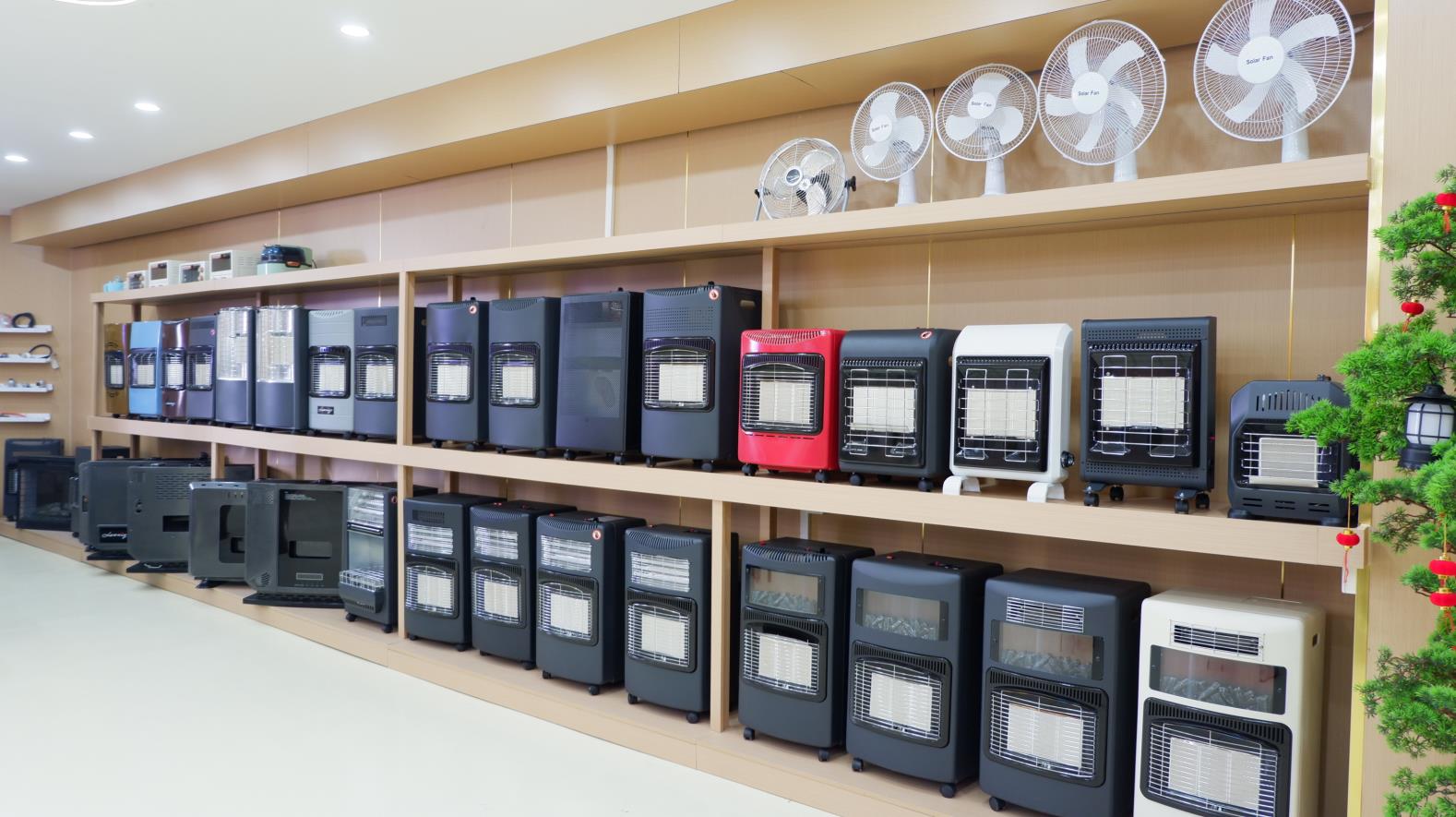
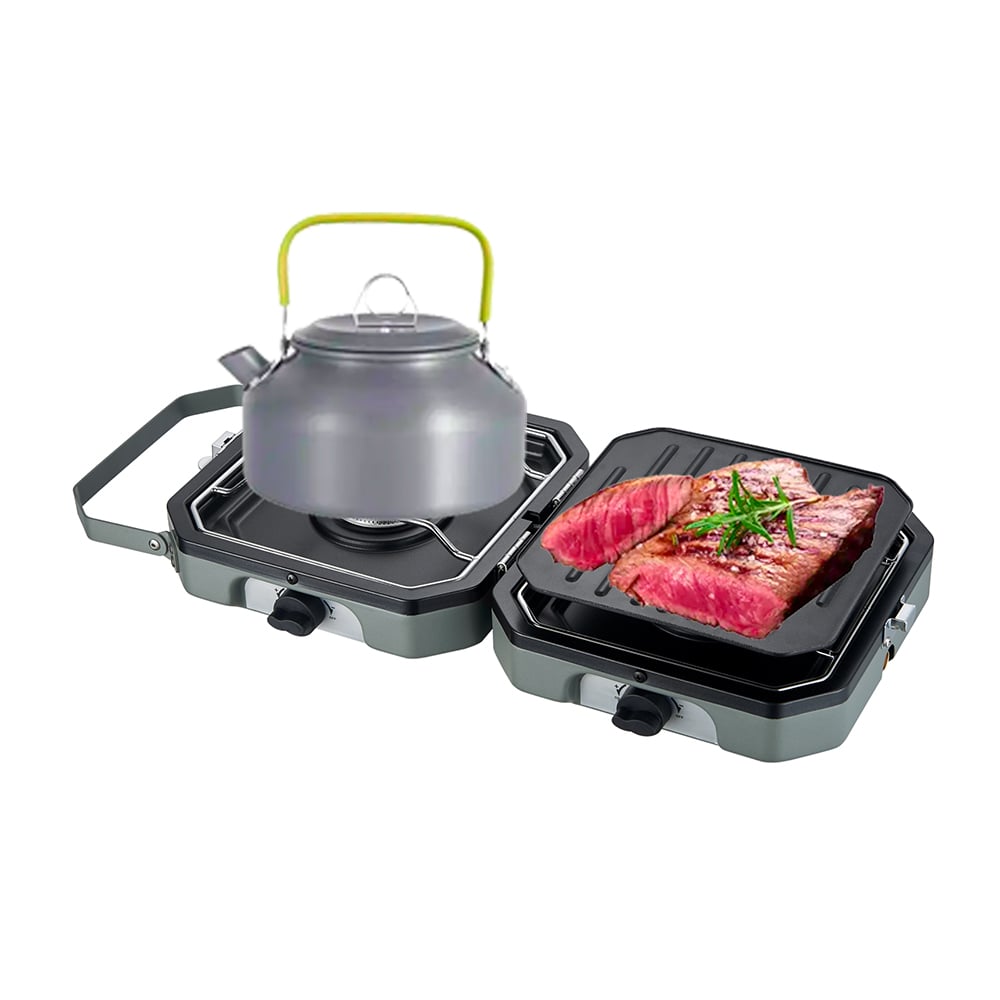
Our current gas room heater range covers the portable radiant and warm-air families in Tables 1 and 2; the patio heater and outdoor kitchen ranges cover the outdoor families.