EN
EN


LQ-HE01F Foldable Gas Room Heater: Unfolded vs Folded Dimensions and the Freight Saving Behind Them
Every heating range runs into the same problem in the off-season. A gas room heater is a steel cabinet with a burner and a ceramic panel inside it. It does not compress, it does not stack neatly, and it occupies the same warehouse footprint in July that it took in December. For a distributor, that idle space is a running cost that arrives whether the product sells or not.
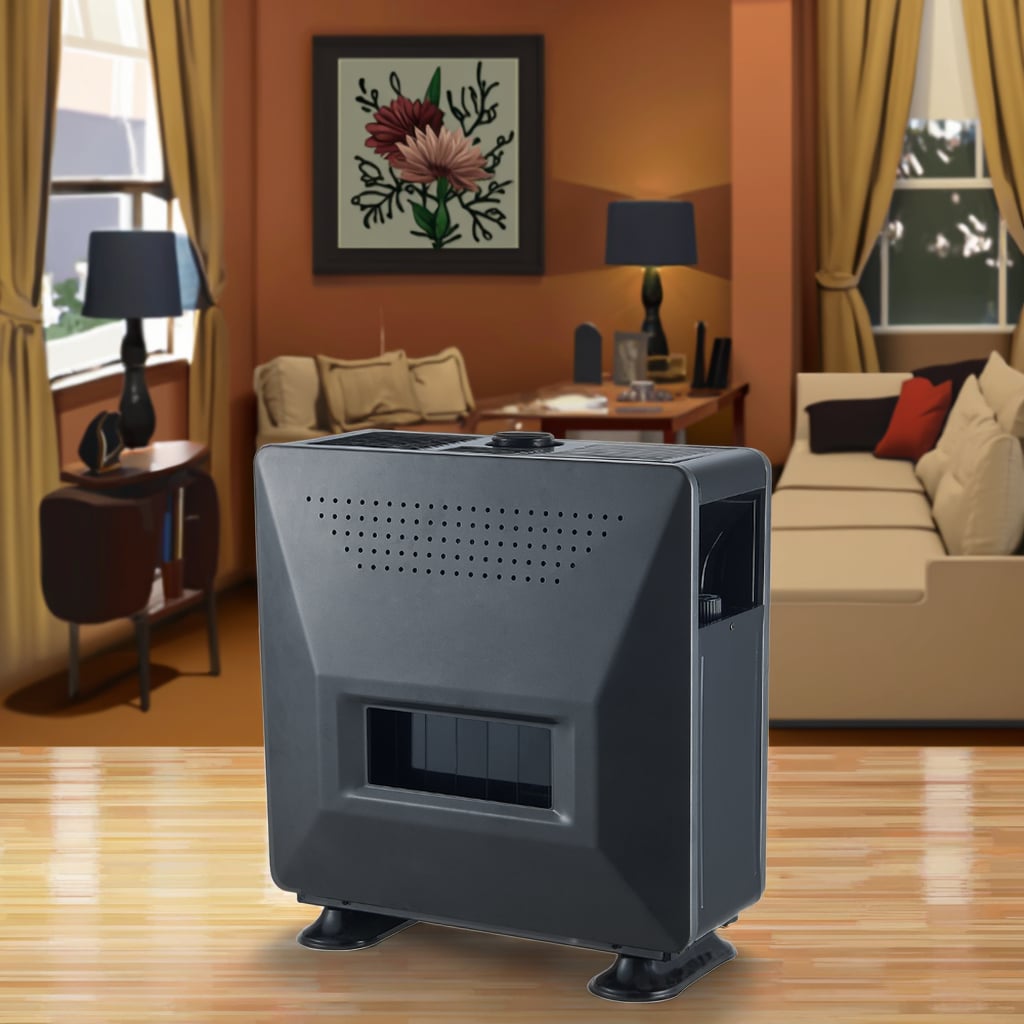
The LQ-HE01F approaches the problem from the cabinet rather than the carton. The unit folds: the front section swings back against the body and the heater collapses from a 360 mm deep appliance into a 120 mm panel — thin enough to stand against a wall, stack on a rack, or slide behind a door at the end of winter.
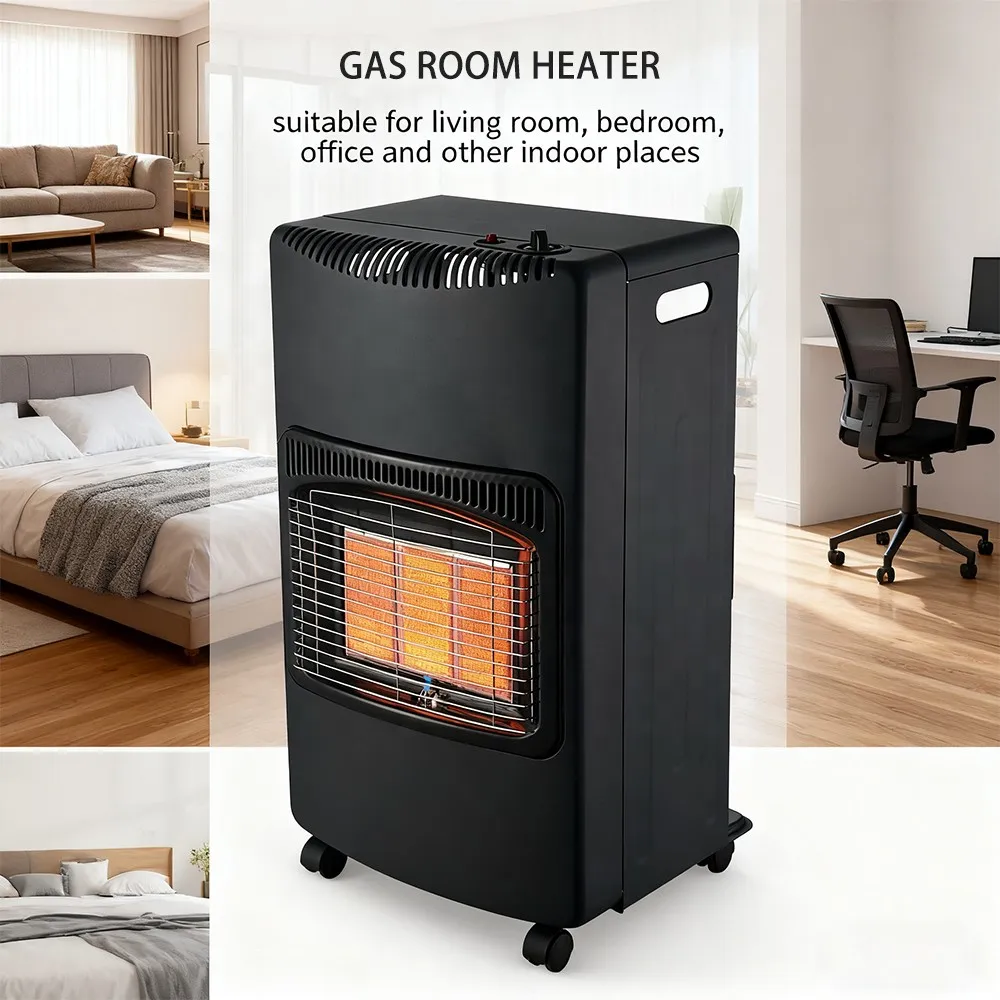
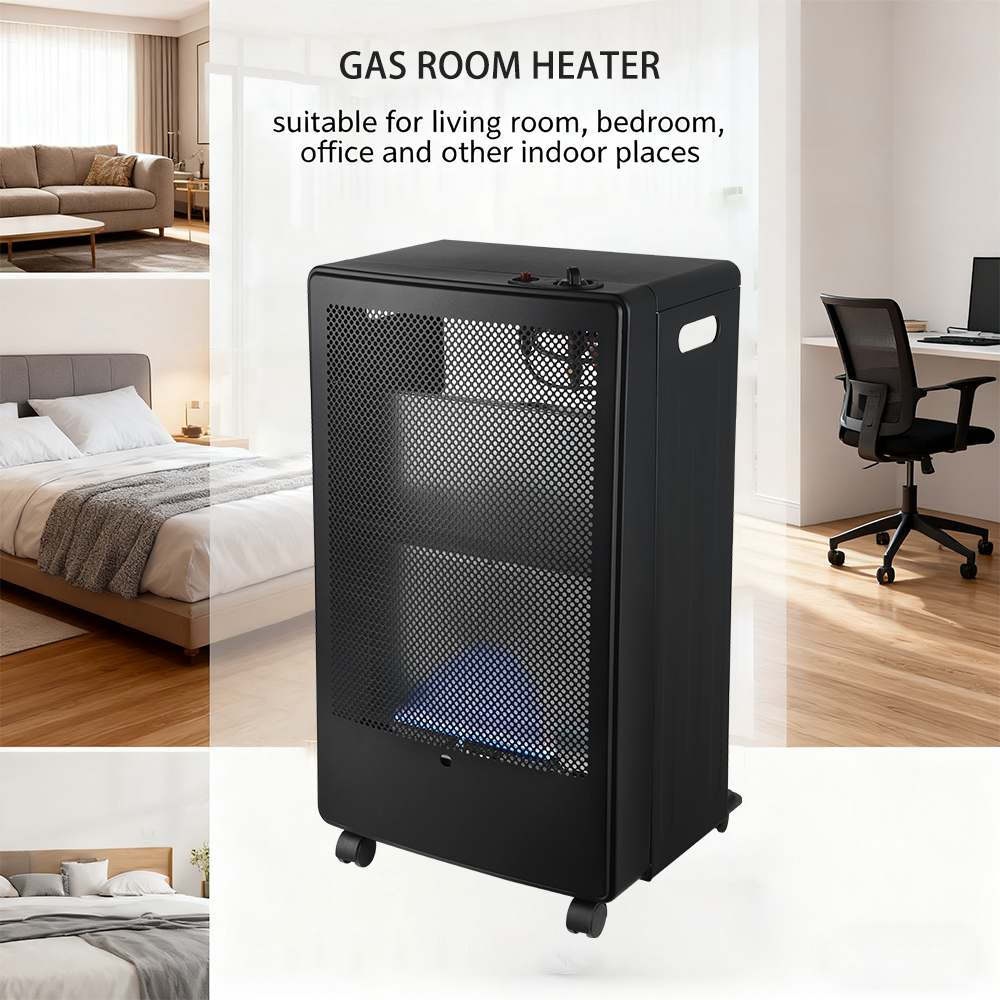
The LQ-HE01F: a gas room heater that stores as a 120 mm panel
The Two Dimensions, Side by Side
Two sets of numbers matter, and they are measured in two different states of the same product.
- In use — 420 × 360 × 730 mm (W × D × H). The working envelope: the cabinet standing on its castors, with the burner chamber and the radiant panel at operating distance. This is the figure that belongs on a retail listing and in your dealer's installation notes.
- Folded — 420 × 120 × 682 mm (W × D × H). The storage envelope: the front section folded flat against the body, the whole unit 120 mm thin. This is the figure that decides what happens in a container and on a warehouse floor.
Two of the three axes change, and one does not. The width stays at 420 mm, because the cabinet is the same object in either state. The depth collapses from 360 mm to 120 mm — a reduction of about 67% on that axis alone. The height drops slightly, from 730 mm to 682 mm, because the folded front section settles at a lower profile than the assembled unit.
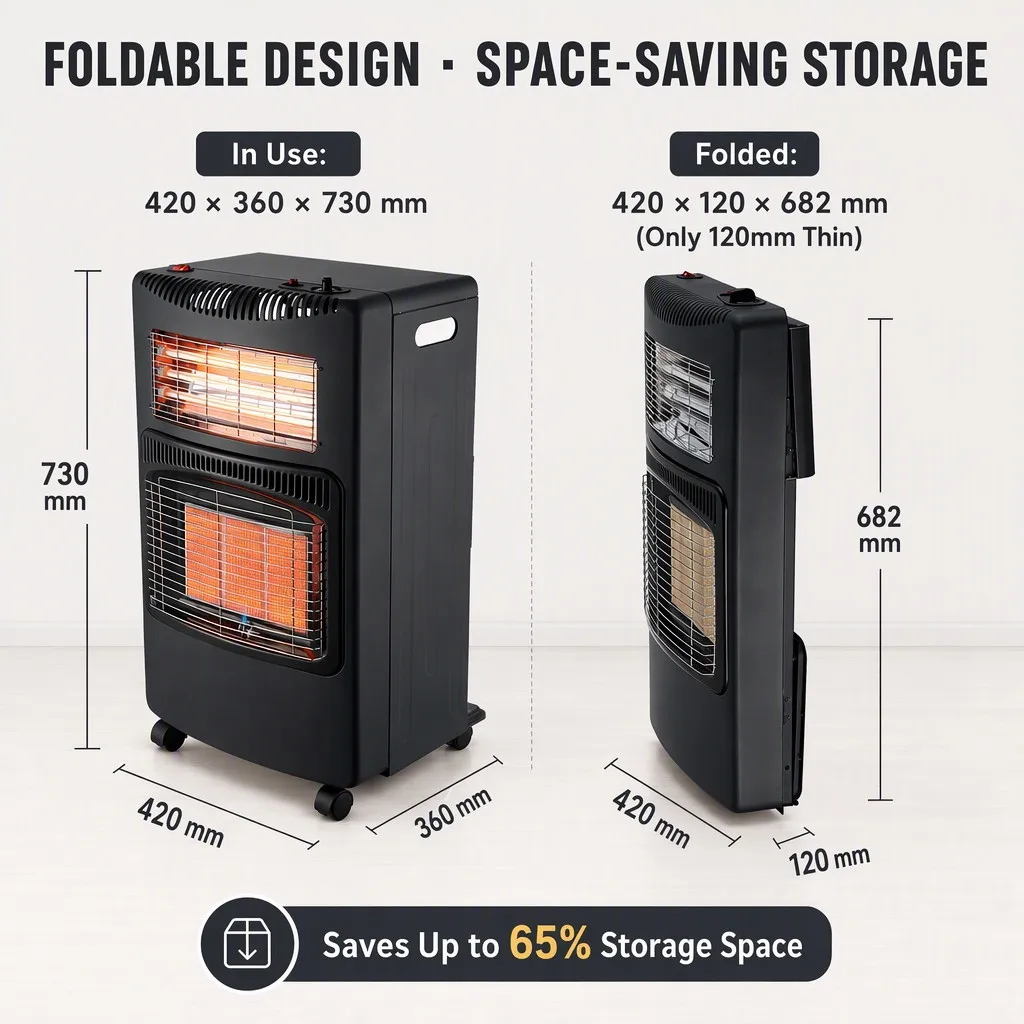
Unfolded 420 × 360 × 730 mm against folded 420 × 120 × 682 mm — up to 65% less storage space
Where the 65% Comes From
Take the two envelopes and multiply them out:
- In use: 420 × 360 × 730 mm = 110.4 litres
- Folded: 420 × 120 × 682 mm = 34.4 litres
The folded cabinet occupies about 31% of the volume of the assembled one, which is a reduction of roughly 69% on raw geometry. The figure published on the specification sheet is up to 65% storage space saved — the rounded number to quote in retail listings and dealer material.
One clarification is worth keeping in front of your buyers. These are product dimensions, not carton dimensions. Freight is charged on carton volume, and a carton adds padding, a base and clearance on every face. The geometry above tells you the direction and the approximate size of the gain. The carton tells you the number you will actually see on a shipping invoice, so ask for the carton size before you model a container.
What the Fold Does to Freight
The container divisor
If a carton scales with the folded cabinet, one container carries roughly three times as many units as the same heater shipped assembled. Treat three times as the ceiling of the gain rather than the figure you will see in practice: cartons do not scale perfectly, pallets take their own footprint, and no one loads a container to the roofline without dunnage.
The weight question that decides it
This is the part most importers miss. A container limit is whichever binds first — volume or payload. A gas room heater is a steel cabinet, which makes it moderately dense; on some appliances the 40-foot payload limit is reached before the volume is used up. If your container is weight-bound, folding buys you less than the geometry suggests, and the honest answer is that you need the unit weight and the carton dimensions before you promise your own customer a saving.
Ask for both at quotation stage. A factory that can hand you a loading plan — carton size, units per pallet, pallets per container, net and gross weight — has already run this exercise for other markets, and the plan is a more useful negotiating document than a price list.
What it is worth per unit
Freight cost per unit is the container cost divided by the number of units in it. Anything that raises the divisor lowers your landed cost without touching the factory price. That is the commercial argument for specifying a foldable cabinet even when its unit price sits above a rigid equivalent.
What the Fold Does to Storage
In your own warehouse
Heating is a seasonal category. Stock arrives before the season and is stored through it, and whatever remains afterwards sits for months. Folding changes the cost of that idle stock: the same rack volume holds roughly three times as many folded units, or the same number of units takes up a third of the floor.
In your dealer's backroom
Retail storage is usually the tightest link in the chain. A dealer who can stand folded units against a wall is a dealer who will place a second order mid-season instead of waiting for space to appear.
At the end customer's home
The user only needs a heater for part of the year. A 120 mm panel goes behind a door, under a bed or into a closet. An assembled 360 mm heater keeps a corner of a small apartment for nine months. In markets where living space is expensive — Japanese, Korean and most Western European cities — that difference is a sellable feature rather than a footnote.
And on returns
Reverse logistics is priced much like outbound freight but negotiated far less carefully. A unit that folds back into its own carton shape is cheaper to move than one that has to travel assembled.
What to Verify Before You Specify a Foldable Heater
A folding mechanism is a mechanical interface on an appliance that also carries gas. These are the points to put to a factory before you commit to a line.
The fold cycle
Ask what the hinge is rated for and how many fold cycles it was tested through. A unit folded twice a year for a decade is a different specification from one folded weekly in a small apartment. Ask what the hinge is made of and whether it is replaceable as a spare.
The gas side of the fold
Either the gas train is unaffected by folding, or folding is impossible while the cylinder is connected. Confirm which applies. A sound design does not let the user create a gas path that has been repeatedly flexed — ask the factory to describe the interlock or the fixed routing, not just the feature.
Stability in use
Folding cabinets trade some rigidity for the fold. Confirm the castor specification, how the unit locks once unfolded, and how it behaves on an uneven floor. For a heater with a cylinder in or behind it, a low centre of gravity matters more to the end user than the folded thickness does.
The carton
Ask whether the unit ships folded, and what protects the hinge and the front panel in transit. The whole commercial argument rests on the carton actually following the folded shape.
Heat output and safety, per model
Folding is a cabinet feature, not a combustion feature. Heat output and its settings, the gas type or types the burner is set for, the ignition method and the safety device package are specified per model and per market. Confirm them for the model you are ordering and for the destination country before you finalise the range. The two burner families importers weigh against each other most often — ceramic infrared and blue flame — behave differently in the room, and the choice is made per market rather than per price list.
OEM and ODM Programmes
A foldable cabinet is worth discussing with a factory before you lock a range. The questions that move a programme forward are usually these: which finish and cabinet colour, whether the foldable version should sit alongside a rigid version of the same output, what carton and pallet configuration suits your market, and what your annual volume looks like. Bring a target specification, the destination market and a volume estimate, and a factory can quote a real programme instead of a catalogue item.
Professional Tips
- Specify on carton dimensions, not product dimensions. The gain is real, but the number you can bank is inside the carton.
- Find out whether your container is volume-bound or weight-bound before you promise a saving to anyone.
- Get the loading plan in writing: carton size, units per pallet, pallets per container, gross weight.
- Ask for the fold-cycle rating and the hinge material in the quotation, not after the first complaint.
- Confirm the fold cannot be operated with the cylinder connected, or that the gas path is fixed across the fold.
- Order hinge and castor spares with the first container — they are the parts that wear first.
- Put the folded dimension on your retail listings. In small-apartment markets it is the line that closes the sale.
FAQ
What are the unfolded dimensions of the LQ-HE01F?
420 × 360 × 730 mm (width × depth × height) with the unit standing on its castors in working position. That is the envelope for installation and for retail listings.
What are the folded dimensions?
420 × 120 × 682 mm. The cabinet is 120 mm thin when folded, with the width unchanged and the height slightly lower than the assembled unit.
How much space does folding actually save?
On raw geometry the folded cabinet is about 31% of the assembled volume, a reduction of roughly 69%. The published figure is up to 65% storage space saved.
Does that mean the carton is the same size as the folded unit?
No. A carton adds padding, a base and clearance on every face. Ask for the carton dimensions — freight is charged on carton volume, not product volume.
How many units fit in a 40-foot container?
It depends on the carton size and on which limit binds first, volume or payload. Ask the factory for a loading plan covering carton size, units per pallet and pallets per container, then check it against your own forwarder's figures.
Is my container likely to be volume-bound or weight-bound?
Whichever is reached first. On a steel-cabinet appliance the 40-foot payload limit can be reached before the volume is exhausted. Get the net and gross weight per unit before you forecast a freight saving.
Does the folding mechanism compromise stability or safety?
That depends on the design. Ask for the hinge rating and fold-cycle count, the castor specification, how the cabinet locks once unfolded, and how the gas path behaves across the fold. Those four answers tell you whether the fold is an engineering feature or a marketing one.
Can the LQ-HE01F be produced under our own brand?
Yes. Bring the target specification, the destination market and gas type, the finish you want, the packaging requirement and an annual volume estimate, and the factory can quote an OEM or ODM programme.
Next Step for Importers and Distributors
The LQ-HE01F is a gas room heater with a 420 × 360 × 730 mm working envelope that folds into a 420 × 120 × 682 mm panel — about a third of the volume, and up to 65% less storage space on the published figure. For an importer that is not a cosmetic detail. It moves the container divisor, the warehouse cost and the retail backroom at the same time.
If you want to model it against your own freight rates, send us your destination port and your target annual volume. We will come back with the carton dimensions, the loading plan and the unit weight so you can run the calculation with your own forwarder's numbers rather than ours. See the rest of the gas room heater range that the LQ-HE01F sits alongside, and the wholesale guide to indoor gas room heaters for the sourcing questions that apply to the category as a whole. Or send the brief directly and we will come back with a configuration and a quotation.