EN


Halloween Starts the Heating Season: Blue Flame vs Infrared, and How to Plan Q4 Stock
In the heating trade, Halloween is not a holiday. It is the week the conversation changes. Somewhere in the last days of October the first genuinely cold night lands across northern Europe, the UK, the northern United States and northern China, and a category that was quiet all summer starts moving. Buyers who spent September comparing quotations start asking about dispatch dates instead.
That makes late October the wrong week to be choosing between flame types. By the time the cold arrives, the decision should be made and the container should be booked. What follows is a short field guide to the two units most of our distributors pair with the season — the blue flame H002L and the infrared H002F — and to the orders that have to be placed before the window closes.
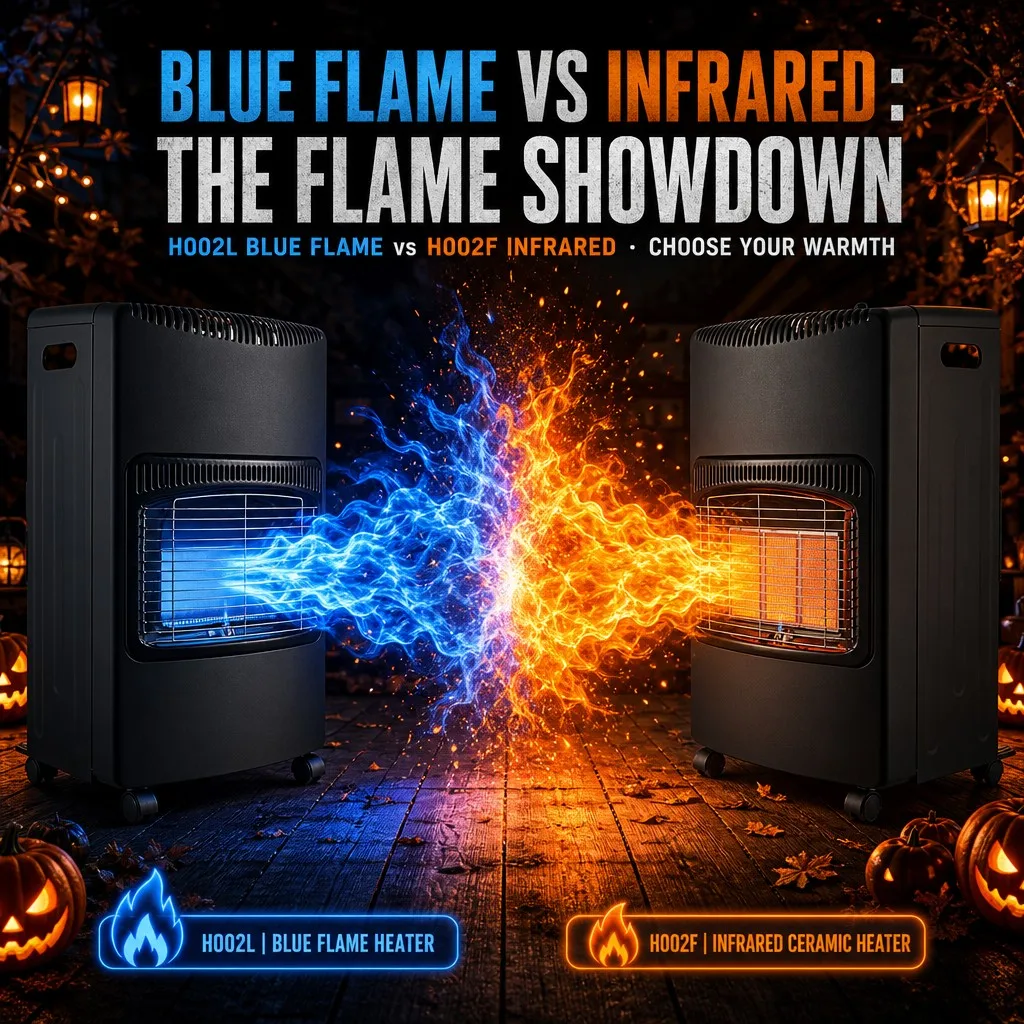
Same cabinet, two flame characters: H002L blue flame on the left, H002F infrared ceramic on the right
Why Halloween Sits on the Ordering Calendar
The first cold snap does the selling
Nobody buys a room heater in a heatwave. Demand is almost entirely triggered by weather, and the trigger in most northern markets arrives within a fortnight of Halloween. The consequence for a distributor is that the sell-in has to happen before the sell-through: your retailers want stock on the floor while the weather is still mild, because that is the only way they participate in the first cold week.
Work backwards from that and the calendar becomes uncomfortable. A container booked in late October lands too late for the first cold snap. The order that actually converts is the one placed while the evenings are still warm — which is precisely the moment nobody feels urgency.
What changes in the retail calendar
Three things move at once after Halloween. Seasonal shop space is re-cut for winter categories. Gift and homeware buyers switch from autumn decor to winter living. And the promotional calendar that runs from Black Friday into December gets locked, which means the SKUs that will be promoted are chosen in the same weeks. A distributor who arrives in November with a new model is pitching into a plan that has already been set.
The Flame Showdown, in Plain Terms
The two units share one cabinet. That is the useful thing to understand first, because it means this is not a choice between two price brackets or two footprints. It is a choice between two ways of putting heat into a room, mounted in the same shell.
H002L — the blue flame
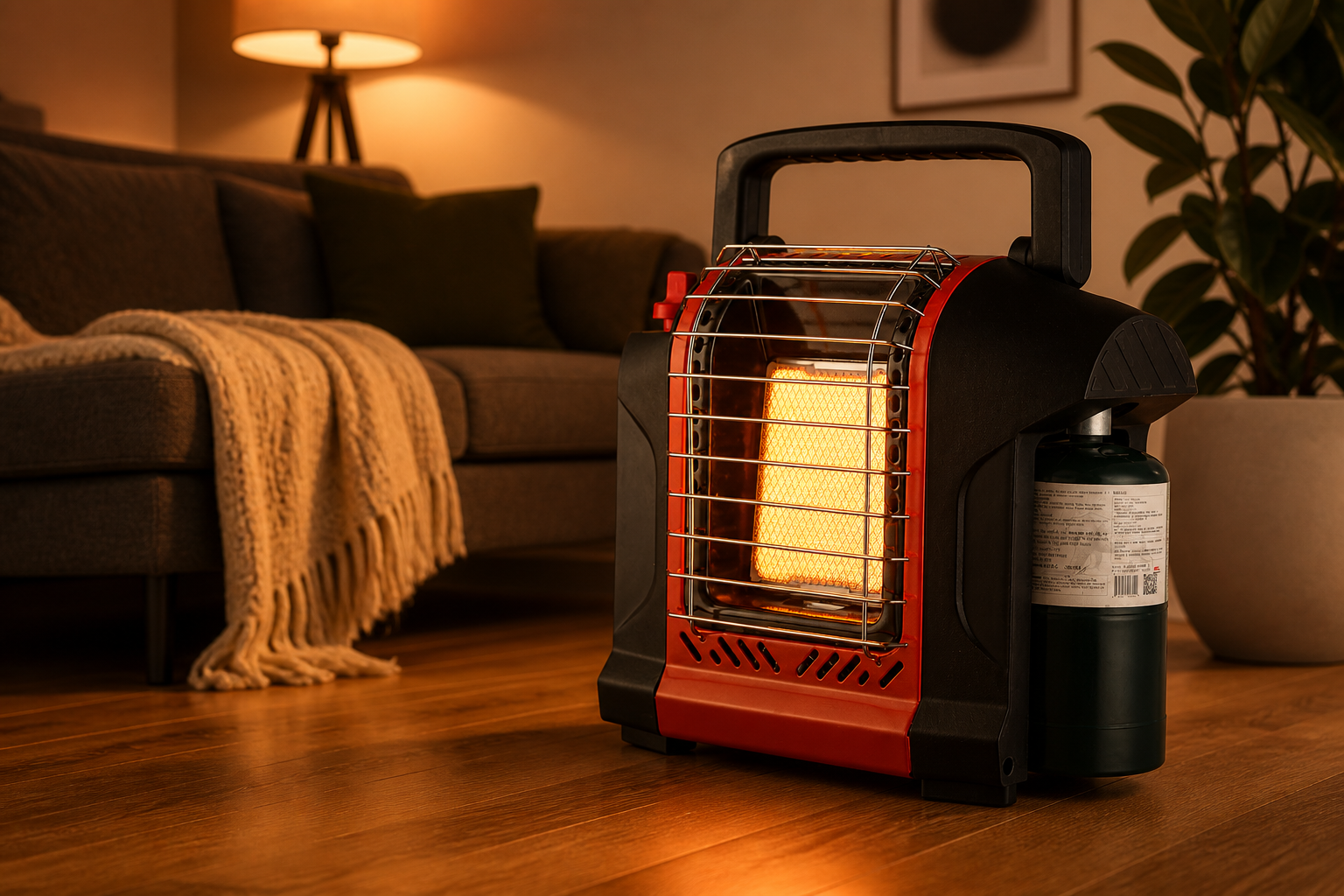
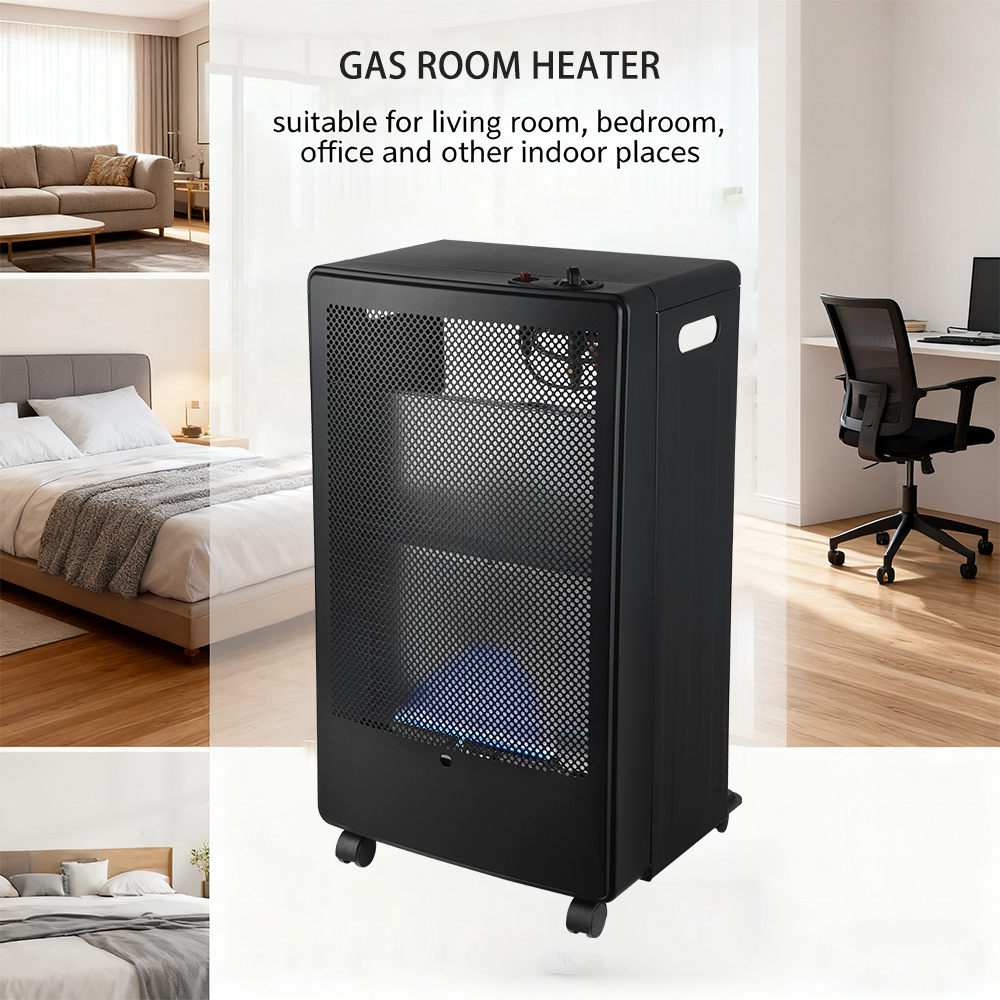
The H002L runs a stainless steel burner and burns with a visible blue flame rated at 3.8 kW. It is a piezo-electric, fully mechanical unit: no fan, no mains connection, nothing to plug in. What a buyer sees is fire — a real flame behind the grille, which is the single most persuasive thing in this category and the reason this model photographs the way it does.
Commercially, the blue flame is the emotional SKU. It sells the idea of a fire in a room that has no chimney, and it does so at a price point that suits a first purchase. The trade-off is the one every flame product carries: the heat is not instant and it is not directional.
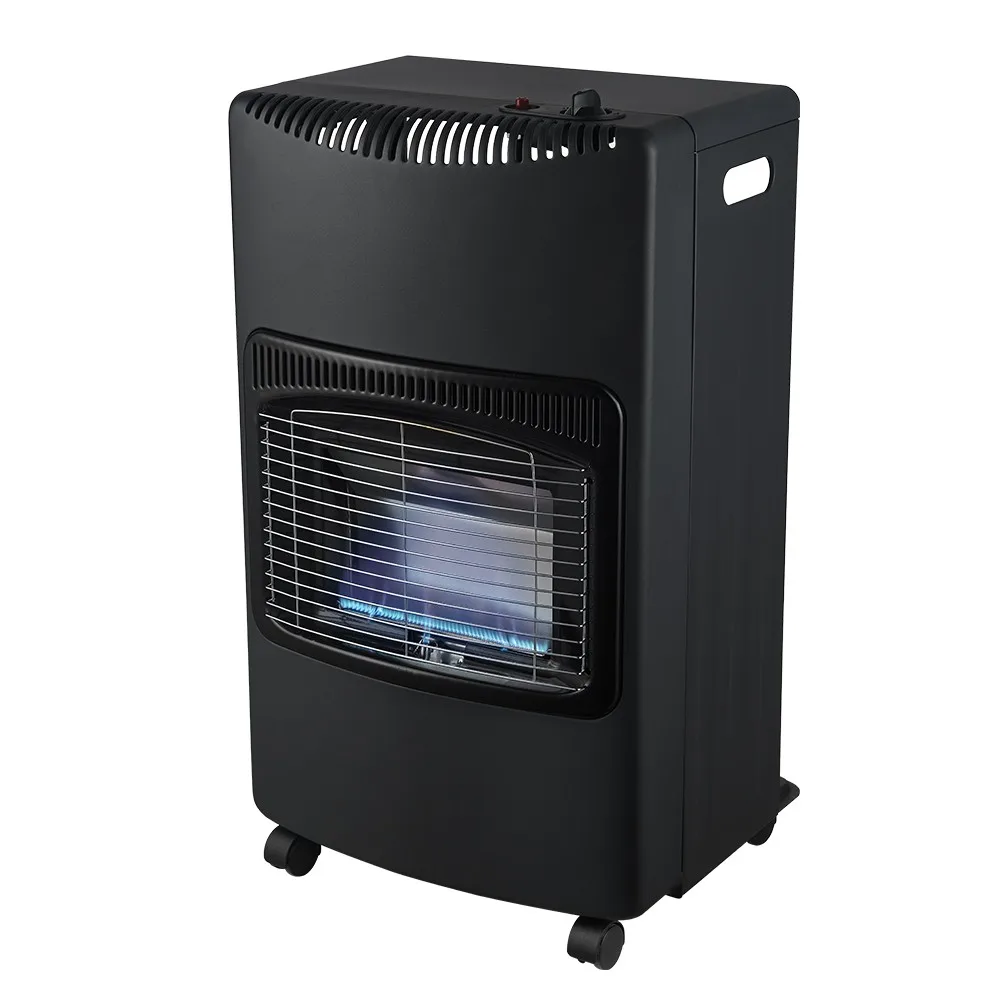
LQ-H002L: stainless steel burner behind the grille, blue flame at 3.8 kW, no mains connection
H002F — the infrared ceramic
The H002F replaces the burner with ceramic plates and heats by radiation. Maximum output is 4.2 kW across three settings, from 1.5 kW upward, and like the blue flame unit it is piezo-electric with no mains connection. What a buyer feels is warmth arriving on the skin almost immediately, in the direction the panel faces, rather than air being warmed around the room.
Commercially, the infrared is the practical SKU. It answers the customer who says “I want to be warm in ten minutes, in this chair”, and it suits the buyer who is replacing an old heater rather than buying an occasion.
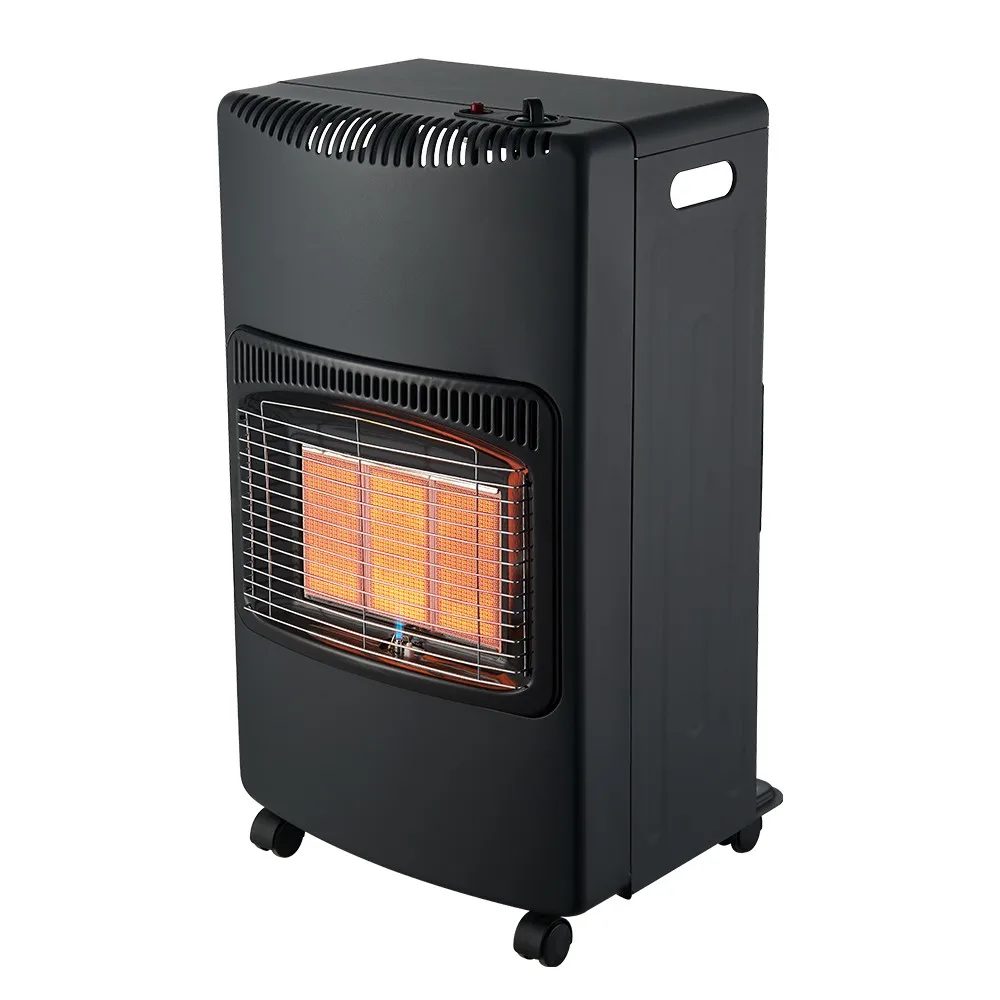
LQ-H002F: ceramic plates, three settings up to 4.2 kW, with ODS, anti-tilt and flame-failure protection
How they actually differ in a room
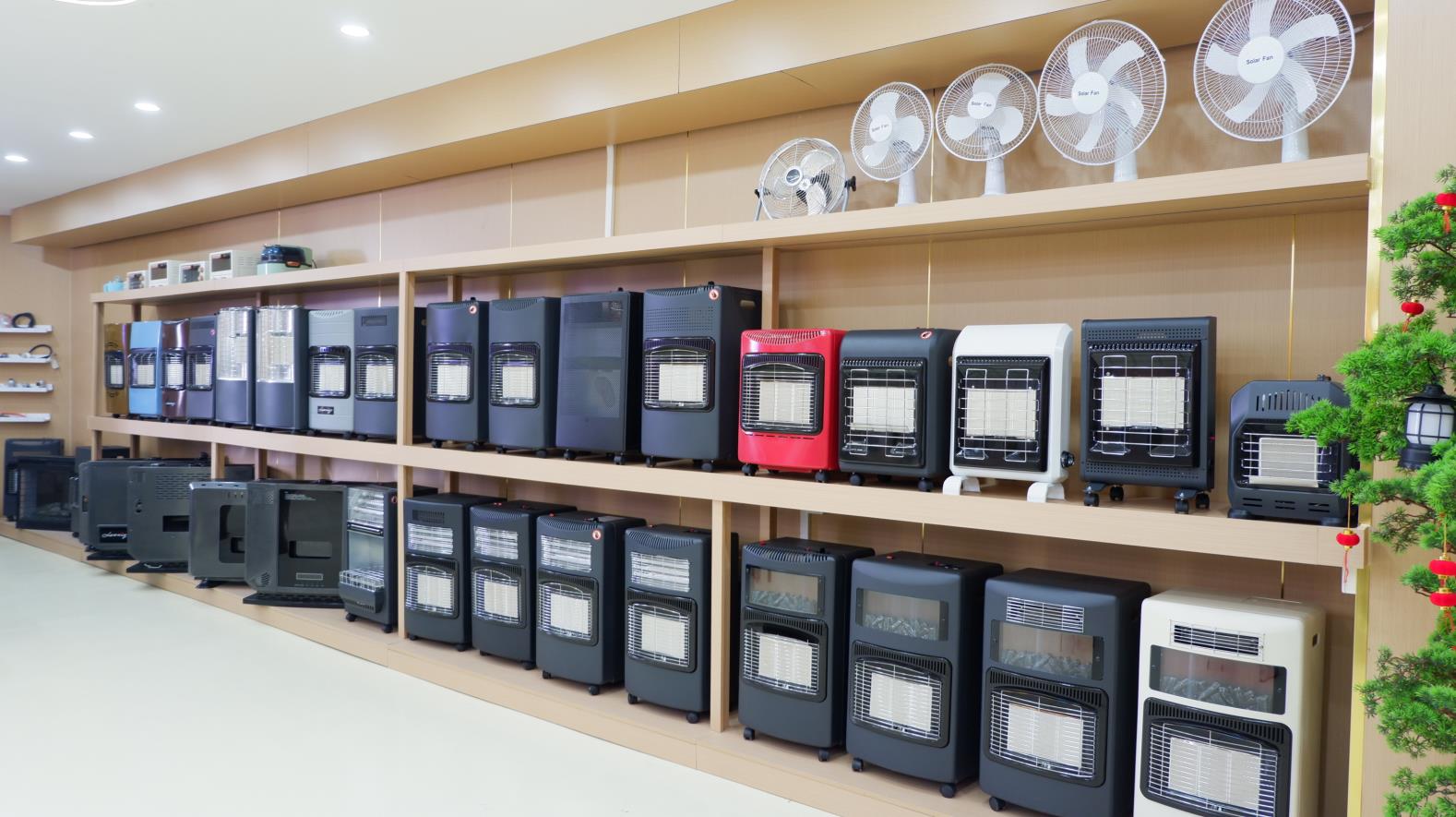
Blue flame heats a volume and looks like a fire. Infrared heats a person and looks like a glowing panel. Neither is better; they answer different sentences. A customer who says “I want the room to feel like a fire is lit” is a blue flame buyer. A customer who says “the corner of this room is always cold” is an infrared buyer. Most retailers need both on the floor for exactly that reason, and the shared cabinet makes the pair easy to merchandise side by side.
Halloween Night, Indoors
Warm the room before the doorbell starts
The most common disappointment with a room heater on an autumn evening is timing. Guests arrive into a cold room, the heater is lit as they come in, and the first hour is spent apologising. Both units need to be running before the room fills, not after.
That is one place where the two models separate in real use. The infrared panel puts warmth on people quickly, which covers the arrival window. The blue flame takes longer to move a room but holds the atmosphere for the rest of the evening. A retailer who can explain that difference in one sentence sells the right unit the first time and avoids the return.
Ambience is a specification too
Halloween is the one week of the year when consumers actively want a flame in the room. It is worth briefing retail staff on it: the blue flame unit is the one the customer will photograph, and the infrared is the one they will sit in front of once the photographs are done. Framing the pair as a choice rather than a range is what converts an autumn enquiry into a two-SKU order.
Two Safety Points That Come Up Every Autumn
Indoor means indoor
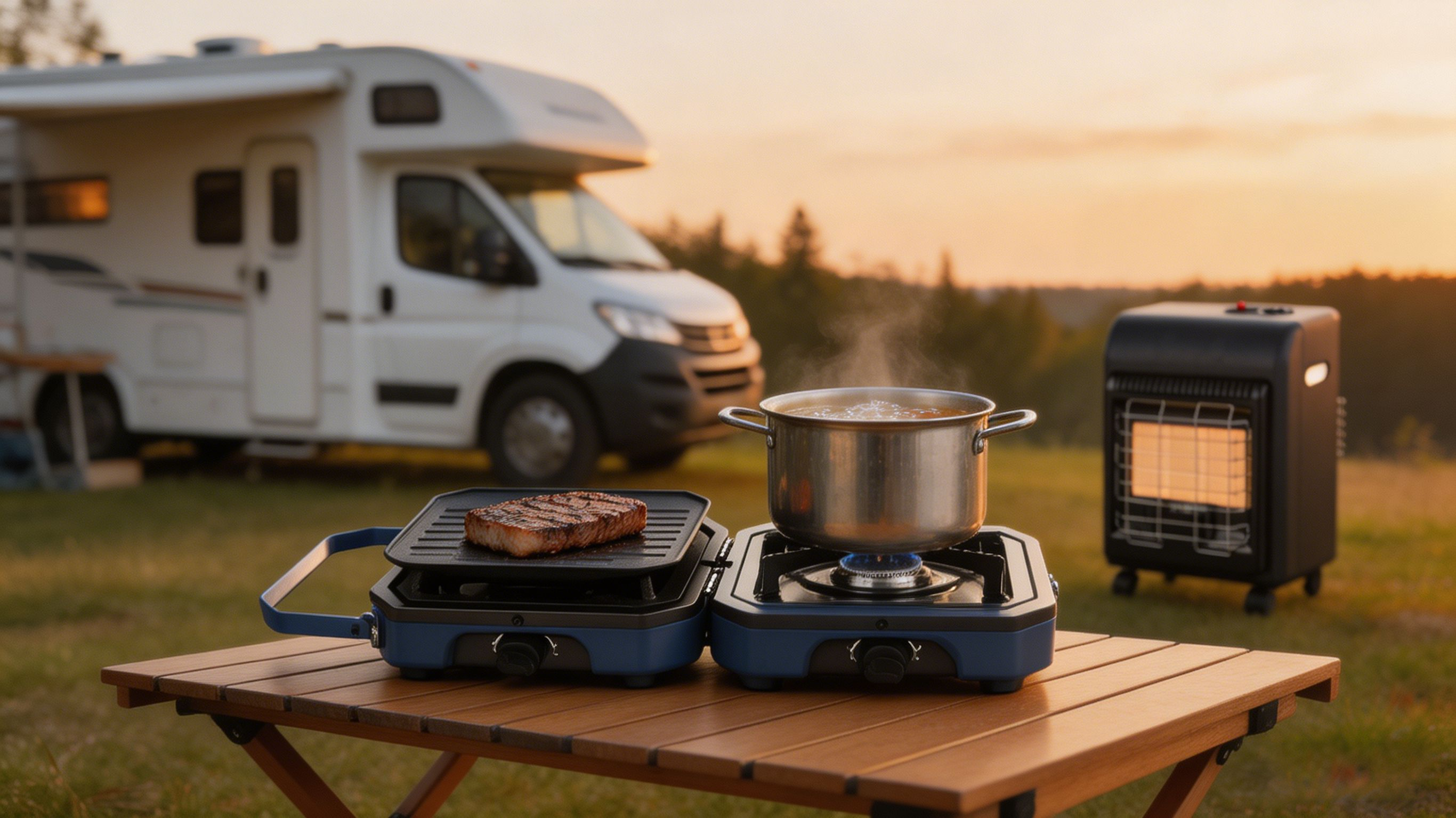
Both models are indoor room heaters. Seasonal photography frequently stages heaters on decks, terraces and doorsteps because it looks warm and festive, and every autumn we see listings and social posts that imply an outdoor installation. They are not outdoor appliances: the combustion, the ventilation assumptions and the safety devices are all designed around a room. If your marketing team is shooting a Halloween set, keep the heater indoors, or keep it unlit and clearly decorative.
Ventilation and the safety devices
These are flueless room heaters, which makes ventilation part of the instruction, not a footnote. Both units carry an oxygen depletion sensor, and the H002F adds anti-tilt and flame-failure protection. Those devices are the reason the appliance is safe in a room — they are not a substitute for a window or a door that opens. Get the ventilation guidance printed in the manual in the language of the market you are shipping to, and check that your dealer's listing repeats it rather than paraphrasing it.
What to Put on the Container Now
The mix
A practical split for a first winter order is to treat the blue flame as the traffic SKU and the infrared as the margin SKU, then adjust by channel. Gift-led retail leans blue flame. Hardware, DIY and replacement-driven channels lean infrared. Because both units share a cabinet, the pair ships and stacks predictably, which keeps the freight maths simple even when the split between them is uncertain.
Spares, manuals and documentation
Winter is when the first service calls arrive, and they are predictable: ignition, regulator, hose, knobs, castors, and the ceramic plates on the infrared unit. Put a first-stock spares order on the same container as the heaters. Do the same with manuals in the destination language and the certification documents your market requires — asking for them in January, after the season has started, is how a distributor loses a retail account.
Ask for the dispatch date, not the delivery date
The one number that determines whether you catch the season is when the goods leave the factory. Ask for that date in writing with the quotation, and plan the sea freight backwards from it. A quotation without a dispatch date is a price, not a plan.
Professional Tips for Buyers
- Book before the cold, not after it. Halloween is the last comfortable week to place a winter order.
- Stock both flame types. They answer different sentences, and the shared cabinet makes the pair cheap to merchandise.
- Brief retail staff on the difference in one line: blue flame for the look, infrared for the warmth on arrival.
- Order spares and manuals on the first container, not the second.
- Get the dispatch date in writing and build the freight plan from it.
- Keep seasonal imagery indoors. An outdoor photograph of an indoor heater creates a liability you cannot argue with later.
- Print the ventilation guidance in the market's language and check that dealers repeat it verbatim.
- Ask what changed on the model since last winter — burner, plates, ignition and safety devices all get revised.
FAQ
What is the difference between the H002L and the H002F?
Both are indoor mobile gas room heaters in the same cabinet, and both need no mains connection. The H002L uses a stainless steel burner and gives a visible blue flame at 3.8 kW. The H002F uses ceramic plates and heats by infrared radiation up to 4.2 kW across three settings. One sells the look of a fire; the other sells fast, directional warmth.
Which one is better for a Halloween evening at home?
For atmosphere, the blue flame. For a room that has to be warm by the time guests arrive, the infrared. Many households would choose the blue flame for the evening and the infrared for the colder weeks afterwards, which is why retailers stock both.
Do either of them need electricity?
No. Both are piezo-electric and fully mechanical. There is no fan, no mains lead and no battery, which also means they keep working during a power cut.
Can I use them outside for a party?
No. They are indoor room heaters. Combustion, ventilation assumptions and the safety devices are all designed around a room, and outdoor use is outside the intended application regardless of how a seasonal photograph looks.
Do they need a chimney or a flue?
No. They are flueless, which is why ventilation guidance in the manual matters. Both units carry an oxygen depletion sensor; the H002F also has anti-tilt and flame-failure protection.
How much heat do they produce?
The H002L is rated at 3.8 kW. The H002F runs to a maximum of 4.2 kW with settings from 1.5 kW upward. Match the output to the room volume your market typically heats — confirm the rated figures and the room-size guidance with us for the exact configuration you order.
Can we order both models under our own brand?
Yes. Both are available for OEM and ODM work, including branding, carton design and manuals in your market's language. Because the cabinet is shared, a dual-SKU programme is straightforward to specify.
Next Step
If you are planning a winter programme, tell us the market, the channel mix and the volumes you expect, and we will come back with the split we would recommend between the blue flame H002L and the infrared H002F, together with a dispatch date you can plan freight around.
For the fuller technical comparison between the two burner types, see our guide to infrared versus blue flame gas room heaters, and for the category as a whole, the gas room heater range.