Outdoor seating is one of the strongest revenue drivers in hospitality — and one of the most seasonal. When temperatures drop, terraces and patios empty out, and operators watch months of potential business shrink away. Gas patio heaters change that equation: by keeping outdoor spaces comfortably warm, they extend the usable season and protect the investment operators have made in their outdoor areas.
This case study examines how restaurants, cafés, and hotels use gas patio heating to turn cold-weather months into productive trading weeks — and what buyers should consider when sourcing these systems.
The Challenge: Cold Months Shrink Outdoor Revenue
For hospitality businesses, the patio is not decoration; it is capacity. Every table outside represents seats that can be filled, served, and billed. Yet for much of the year in many markets, those seats go unused because guests simply cannot sit comfortably in cold air.
The result is a familiar pattern: outdoor capacity peaks in summer, then sits idle for months. Operators who can heat their terraces effectively gain a clear competitive advantage — they serve guests who would otherwise dine indoors or not at all.
The Solution: Gas Patio Heaters Matched to the Space
Gas patio heaters deliver high heat output where it is needed, without the installation cost of fixed heating systems. Key selection points for hospitality buyers:
-
Heat output and coverage: Match the heater's output to the area to be covered. Larger terraces benefit from multiple high-output units spaced to avoid cold zones; smaller cafés can use fewer, well-placed heaters.
-
Fuel choice: Propane (LPG) units offer flexibility with no permanent gas line; natural gas units suit venues with existing supply. Confirm the gas type and pressure configuration for your market.
-
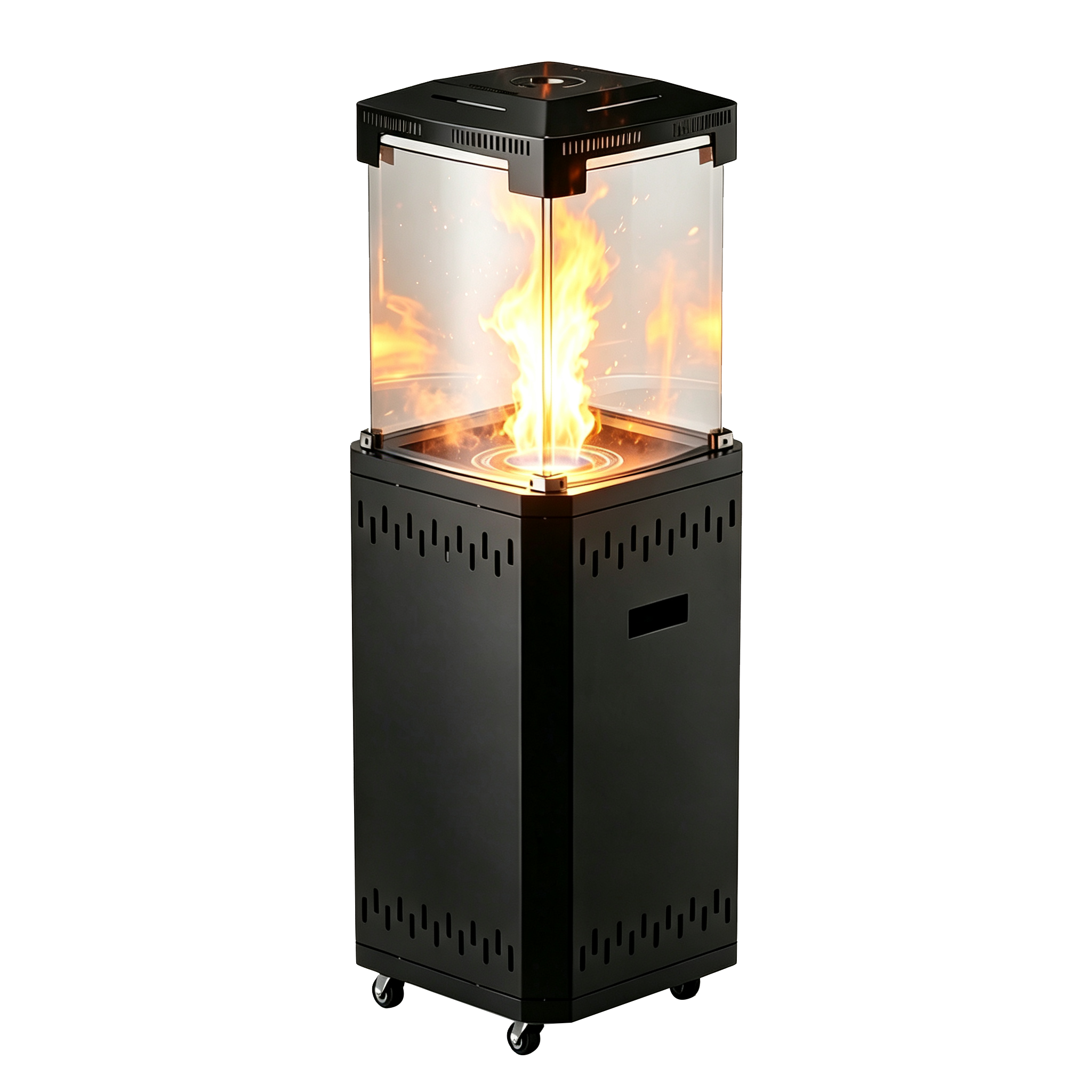
Mobility: Free-standing, wheeled units let staff reposition heat as guests move between tables — a practical advantage over fixed units.
-
Durability: Stainless steel construction resists outdoor weather and frequent handling, reducing replacement cycles in commercial use.
-
Certification: Units must carry the certifications required in the destination market (CE for Europe, UKCA for the UK, and equivalent schemes elsewhere), with compliance documentation available before you commit to an order.
Implementation Considerations for Hospitality Buyers
Beyond the heaters themselves, successful patio heating programs depend on a few operational details:
-
Layout planning: Position heaters to cover seating zones evenly, keeping aisles and service paths clear. A mix of heater types — tall units for open areas, compact units for smaller nooks — gives the most flexible coverage.
-
Gas supply management: For propane systems, plan cylinder storage and changeover routines so heat is never interrupted during service hours. For natural gas, confirm the venue's supply capacity before finalizing heater counts.
-
Safety and compliance: Heaters must be placed away from flammable materials, checked for gas-tightness at installation, and operated in accordance with the manufacturer's instructions. Certificates should be verified before purchase, not after.
-
Maintenance: Simple routines — inspecting hoses and connections, cleaning reflectors and burners, checking ignition systems — keep commercial heaters reliable through a full season.
The Business Case for Patio Heating
The commercial logic of patio heating is straightforward:
-
Longer trading season: Heating extends comfortable outdoor dining by months at both ends of the season, converting previously idle weeks into trading weeks.
-
Higher seat utilization: Warm, inviting terraces fill tables that would otherwise stand empty on cool evenings.
-
Better guest experience: Comfortable outdoor dining encourages longer visits and return business — factors that matter more than the running cost of the heaters themselves.
-
Measurable return: For most venues, the incremental revenue generated during extended outdoor weeks comfortably exceeds the investment in heating equipment. Operators typically see the business case within the first season of use.
Why Hospitality Buyers Choose Luoqi
Luoqi's outdoor gas heating range is built for commercial duty cycles and export supply:
-
Certified products: Heaters are available with the certification packages required for your target markets, with documents provided during sourcing.
-
Factory-direct sourcing: Consistent quality control across batches, including gas-tightness and burn-off testing before packing.
-
OEM/ODM support: Custom branding, packaging, and market-specific configuration to match your channel and brand.
-
Flexible ordering: MOQ and mixed-SKU containers sized for distributors testing a market or scaling an existing one.
-
Seasonal supply reliability: Ordering 3–4 months before your peak season locks capacity and pricing.
Partner with Us on Your Patio Heating Project
Whether you are equipping a single flagship terrace or building a national distribution program for patio heaters, Luoqi is ready to support you with specifications, certification documents, samples, and quotation tailored to your market and volume.
Contact our sales team with your target markets and quantity — we will respond with a matching solution for your next outdoor season.


 EN
EN